


 English
 Español
 русский


Heat Stabilized Cable Ties for High Temperature Applications
Heat stabilized cable ties are nylon ties formulated with additives that slow thermal degradation, allowing them to maintain tensile strength and locking performance in environments where standard nylon would become brittle or soften. The effect depends on the stabilization package and the base polymer: heat-stabilized PA66 is commonly rated for continuous use up to 105–120°C, while specialized grades using PA46 can reach 150°C. These ties are used in automotive engine compartments, HVAC equipment, electrical panels, and industrial machinery — anywhere standard nylon ties would fail prematurely. This guide explains how heat stabilization works, what temperature ratings actually mean, and how to select the right tie for a hot environment. To see the full range of nylon cable ties available, explore the full nylon cable tie range.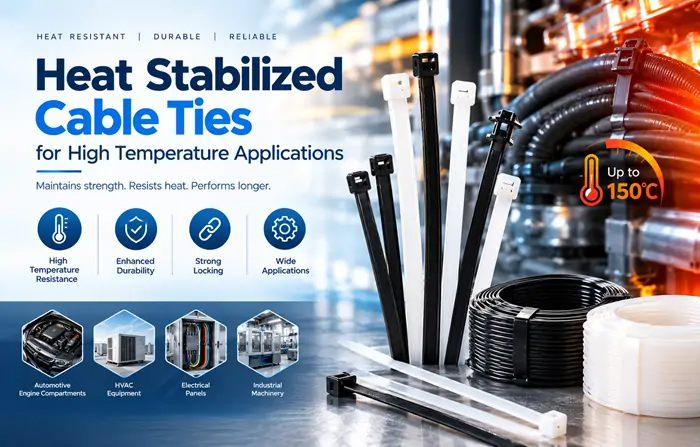
1. Why Standard Nylon Ties Fail Under Heat
Nylon 6.6 begins to degrade when exposed to elevated temperatures for extended periods. The degradation is not a single event — it is a cumulative process driven by oxidation and molecular chain scission.
At elevated temperatures, oxygen reacts with the polymer chain, forming hydroperoxides that break down into free radicals. These radicals attack adjacent polymer chains, reducing molecular weight and eventually causing embrittlement, discoloration, and loss of tensile strength. The process accelerates as temperature increases: a rule of thumb in polymer science is that reaction rates roughly double for every 10°C rise in temperature.
For a cable tie, this means a standard PA66 tie that performs well at 23°C may lose a significant portion of its tensile strength after months at 100°C or above. The locking mechanism may also be affected if the material softens or becomes brittle. Visual inspection is not reliable — a tie can look intact while its molecular structure has already been compromised.
2. What Heat Stabilizers Do
Heat stabilizers are additive packages that interrupt the thermal oxidation process. They work through two primary mechanisms:
Free radical scavenging — Antioxidants, particularly hindered phenols and phosphites, react with the free radicals formed during thermal exposure, converting them into stable species before they can attack the polymer chain. This slows the chain scission process that leads to embrittlement.
Peroxide decomposition — Secondary antioxidants decompose hydroperoxides into non-radical products, preventing them from breaking down into additional free radicals. This extends the induction period before degradation becomes measurable.
In cable ties, the stabilization package is incorporated into the nylon compound during compounding, before injection molding. The additives are distributed throughout the material, providing protection from the surface inward. However, stabilizers are consumed over time — once depleted, degradation proceeds at the rate of the unstabilized polymer. This is why heat-stabilized ties have a finite service life at temperature, not an unlimited one.
3. Heat Stabilization and UV Stabilization Are Not the Same
A common assumption is that a “stabilized” tie is protected against all environmental stressors. Heat stabilization and UV stabilization address different degradation mechanisms, and a tie stabilized for one may not be protected against the other.
| Stabilization Type | Primary Stressor Addressed | Mechanism | Outdoor UV Protection |
| Heat stabilization | Thermal oxidation | Antioxidants scavenge radicals formed by heat | Not inherently |
| UV stabilization | Photo-oxidation | HALS and UV absorbers intercept UV energy and neutralize degradation products | Yes |
| Heat + UV stabilization | Both thermal and photo-oxidation | Combined additive package | Yes, with heat resistance |
Some products combine both packages, which is common in automotive and outdoor industrial applications where ties are exposed to heat and sunlight. However, a heat-stabilized tie without UV stabilization may still degrade rapidly in direct sunlight. Buyers should verify both properties independently when the application involves heat and outdoor exposure.
For a detailed comparison of how base polymers respond to heat and moisture, compare PA66 and PA6 material properties.
4. What “Heat Stabilized” Temperature Ratings Actually Mean
Temperature ratings on cable tie datasheets are not standardized across the industry, and the number alone does not guarantee performance. A rating typically reflects one of several test conditions:
- Continuous service temperature — The temperature at which the tie is expected to maintain a defined percentage of its initial tensile strength over a specified time.
- Intermittent peak temperature — A higher temperature the tie can survive for short periods without immediate failure.
- Heat ageing test temperature — The temperature used in an accelerated aging test, not necessarily the recommended service temperature.
The same base polymer can carry different ratings depending on the stabilization package and the test protocol used. Heat-stabilized PA66 products are commonly rated for continuous use in the 105–120°C range, while some PA46-based products reach 150°C. A higher number on a datasheet is not automatically better — it may reflect a shorter test duration or a different failure criterion.
5. Common Temperature Ranges for Heat-Stabilized Ties
| Material / Grade | Typical Continuous Rating | Notes |
| Standard PA66 (unstabilized) | 85°C | General-purpose nylon |
| Heat-stabilized PA66 | 105–120°C | Most common heat-stabilized grade |
| Heat-stabilized PA46 | 150°C | Higher-temperature base polymer |
| Heat-stabilized PA66 with high-performance package | Application-dependent | Verify test data with supplier |
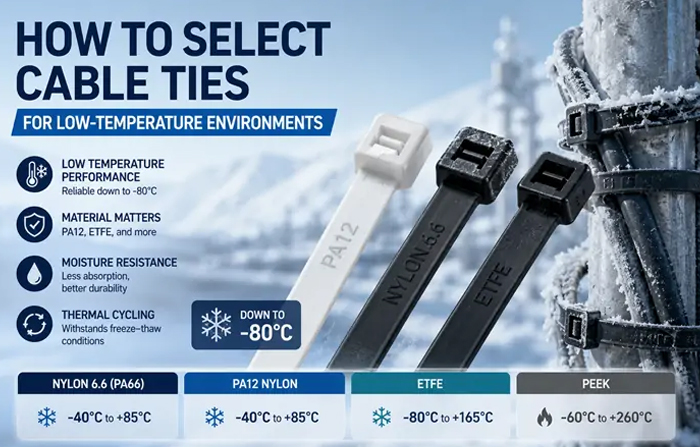
| PTFE | Up to 260°C | Fluoropolymer; different property profile |
For applications approaching or exceeding the upper end of heat-stabilized PA66 capability, alternative materials may be required. To compare options, review high-performance material options.
6. Where Heat-Stabilized Ties Are Used
Heat-stabilized ties are specified where standard nylon would degrade faster than the maintenance interval or the product lifetime:
Automotive — Engine compartments, exhaust-adjacent routing, and under-hood wiring harnesses expose ties to sustained heat and thermal cycling. Heat-stabilized PA66 is commonly used in these locations, though temperatures near exhaust components may exceed its rating and require alternative materials.
HVAC — Heating units, ductwork, and air-handling equipment expose ties to warm air streams and localized heat. Heat-stabilized ties are used to secure wiring, sensors, and insulation in these assemblies.
Electrical panels and control cabinets — Heat buildup from transformers, drives, and power electronics can raise internal temperatures above ambient. Heat-stabilized ties maintain bundling integrity in these enclosures.
Industrial machinery — Motors, pumps, and process equipment generate heat that degrades standard nylon over time. Heat-stabilized ties are used for cable and hose routing in these environments.
Appliances — Ovens, heaters, and other heat-generating appliances use heat-stabilized ties internally where standard ties would fail.
7. Selection Checklist for High-Temperature Applications
When specifying a tie for a hot environment, verify the following:
- Actual temperature profile — What is the continuous temperature? What are the peak temperatures and how long do they last?
- Rating basis — Is the published rating a continuous service temperature, an intermittent peak, or a heat-ageing test temperature?
- Stabilization package — Does the product combine heat and UV stabilization if both stressors are present?
- Tensile strength retention — Has the supplier provided data on strength retention after heat ageing, not just the initial tensile strength?
- Installation temperature — Some heat-stabilized ties have a minimum installation temperature (often around -10°C to -20°C); verify this if installation occurs in cold conditions.
- Chemical exposure — Heat and chemicals can interact; if the environment also involves oils, fuels, or solvents, verify compatibility.
- Certification — Some applications require UL, CSA, or industry-specific certifications; confirm the product carries the relevant approvals.
If the temperature profile or chemical environment falls outside standard heat-stabilized PA66 capability, consult the technical team for material recommendations.
8. Common Mistakes to Avoid
Mistake 1: Treating the temperature rating as a guarantee
A rating is a test-based reference, not a performance guarantee under all conditions. Actual service life depends on the specific temperature profile, cycling, chemical exposure, and mechanical load.
Mistake 2: Assuming heat stabilization covers UV exposure
Heat stabilizers protect against thermal oxidation, not photo-oxidation. A heat-stabilized tie used outdoors without UV stabilization may still degrade rapidly in sunlight.
Mistake 3: Using the highest rated tie without confirming the rating basis
A 150°C rating may reflect a different test condition than a 105°C rating. Compare the test method and failure criteria, not just the number.
Mistake 4: Ignoring installation temperature limits
Some heat-stabilized ties are rated for high continuous service temperatures but have a minimum installation temperature around -10°C to -20°C. Installing them in colder conditions may cause cracking.
Mistake 5: Overlooking stabilizer depletion
Heat stabilizers are consumed over time. A tie that performs well in short-term testing may still degrade over years of continuous heat exposure. For long-life applications, request long-term heat-ageing data rather than relying on short-term ratings.
FAQ
Q: What temperature can heat-stabilized cable ties withstand?
Heat-stabilized PA66 ties are commonly rated for continuous use up to 105–120°C. Heat-stabilized PA46 grades can reach 150°C. The actual rating depends on the specific stabilization package and test method used by the manufacturer.
Q: What is the difference between heat-stabilized and standard nylon cable ties?
Standard nylon ties begin to degrade faster at elevated temperatures. Heat-stabilized ties contain additives that slow thermal oxidation, allowing them to maintain tensile strength and locking performance for longer periods at temperatures that would shorten the life of standard ties.
Q: Are heat-stabilized cable ties also UV-resistant?
Not necessarily. Heat stabilization and UV stabilization address different degradation mechanisms. Some products combine both, but a heat-stabilized tie without UV stabilization may still degrade in sunlight. Verify both properties if the application involves heat and outdoor exposure.
Q: Can heat-stabilized cable ties be used outdoors?
They can be used outdoors if they also carry UV stabilization. Heat stabilization alone does not protect against photo-oxidation. For outdoor applications, select a product with both heat and UV stabilization, or consider PA12 or PTFE depending on temperature requirements.
Q: What is the difference between heat-stabilized PA66 and PA46?
PA66 is the more common base polymer and is heat-stabilized to 105–120°C. PA46 has a higher melting point and can be heat-stabilized to 150°C, but it is a different polymer with different processing and property characteristics.
Q: How do I know if a heat-stabilized tie will last in my application?
Request heat-ageing data from the supplier, including the test temperature, duration, and the percentage of tensile strength retained. For critical applications, consider independent testing under conditions that match the actual service environment.
Q: Can heat-stabilized cable ties be used in automotive engine compartments?
Yes, heat-stabilized PA66 ties are commonly used in under-hood and engine-compartment applications. However, locations near exhaust components may exceed the rating of PA66 and require PA46, PTFE, or metal ties.
Q: What happens when a heat-stabilized cable tie reaches the end of its service life?
The stabilizers are consumed, and the polymer begins to oxidize. The tie may become brittle, lose tensile strength, or fail at the locking mechanism. Visual inspection may not reveal the degradation until failure occurs.
Q: Are heat-stabilized cable ties more expensive than standard ties?
Yes. The additive package and the additional compounding and testing steps increase cost. The premium is justified in applications where standard ties would fail prematurely and require rework or maintenance.
Q: What certifications should I look for in a heat-stabilized cable tie?
Common certifications include UL, CSA, RoHS, and REACH. Some HVAC and automotive applications require specific approvals such as UL181B-C. Confirm the relevant certification for your industry.
Conclusion
Heat-stabilized cable ties extend the service life of nylon ties in elevated-temperature environments by slowing thermal oxidation through antioxidant additives. They are rated for continuous use in the 105–120°C range for PA66, with PA46 grades reaching 150°C. They are used in automotive, HVAC, electrical, and industrial applications where standard nylon would degrade prematurely.
The most common mistakes are treating the temperature rating as an unconditional guarantee, assuming heat stabilization also provides UV protection, and overlooking stabilizer depletion over long service life. A heat-stabilized tie is not a permanent solution at temperature — it is a material designed to slow degradation for a defined period under specific conditions.
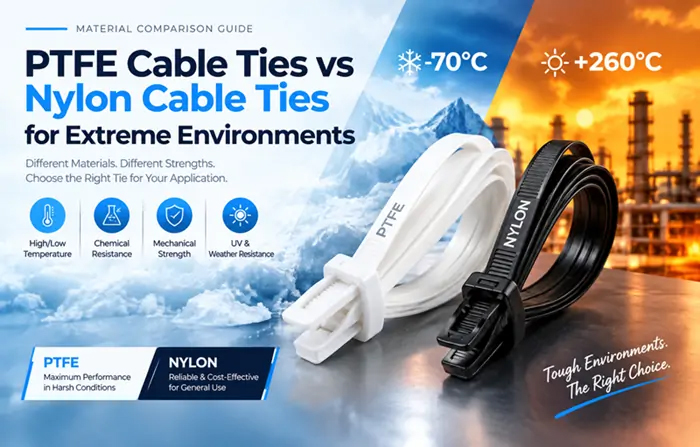
For applications approaching or exceeding the upper end of heat-stabilized PA66 capability, alternative materials may be required. To compare high-temperature options beyond nylon, compare PTFE and nylon cable ties for extreme environments.
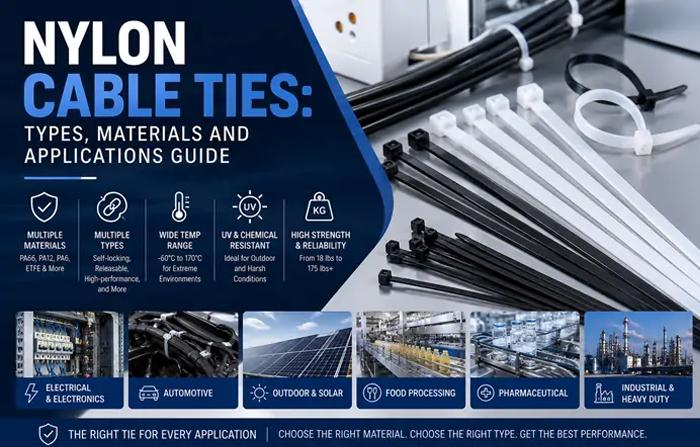
To build a broader understanding of cable tie materials and selection, explore our guide on nylon cable tie types, materials, and applications.
Disclaimer: The temperature ratings, material data, and stabilization information presented in this article are compiled from industry-standard references, supplier technical datasheets, and general polymer science knowledge for general informational purposes only. Actual product performance varies by manufacturer, stabilization package, test method, and application conditions. Buyers should request product-specific heat-ageing data and verify ratings against their actual temperature profile before specification.
NEXT:Why does the nylon cable tie turn yellow after a period of time?
Interested in cooperation or have questions?
-
 View MoreMiniature Nylon Cable Ties 18 LBS
-
 View MoreIntermediate Nylon Cable Ties 40 LBS
-
 View MoreStandard Nylon Cable Ties 50 LBS
-
View MoreHeavy Duty Nylon Cable Ties 120 175 250 LBS
-
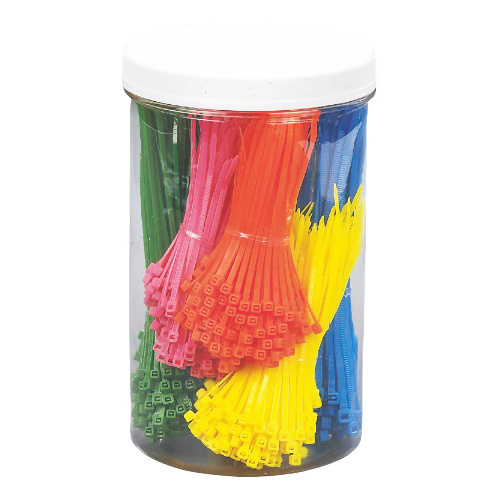 View MoreBulk Cable Tie Value Pack
-
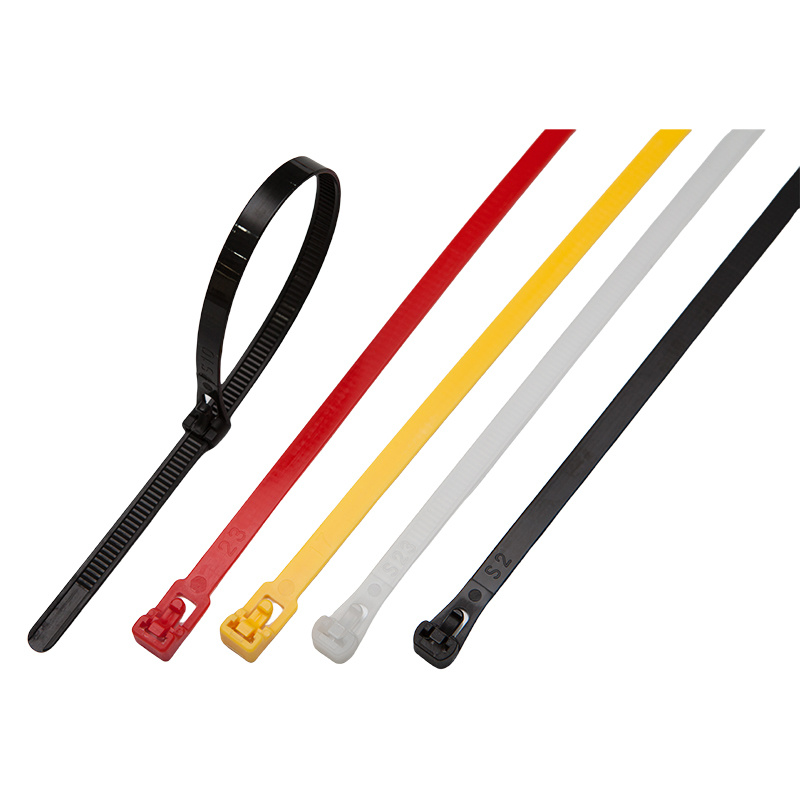 View MoreReusable Releasable Cable Ties
-
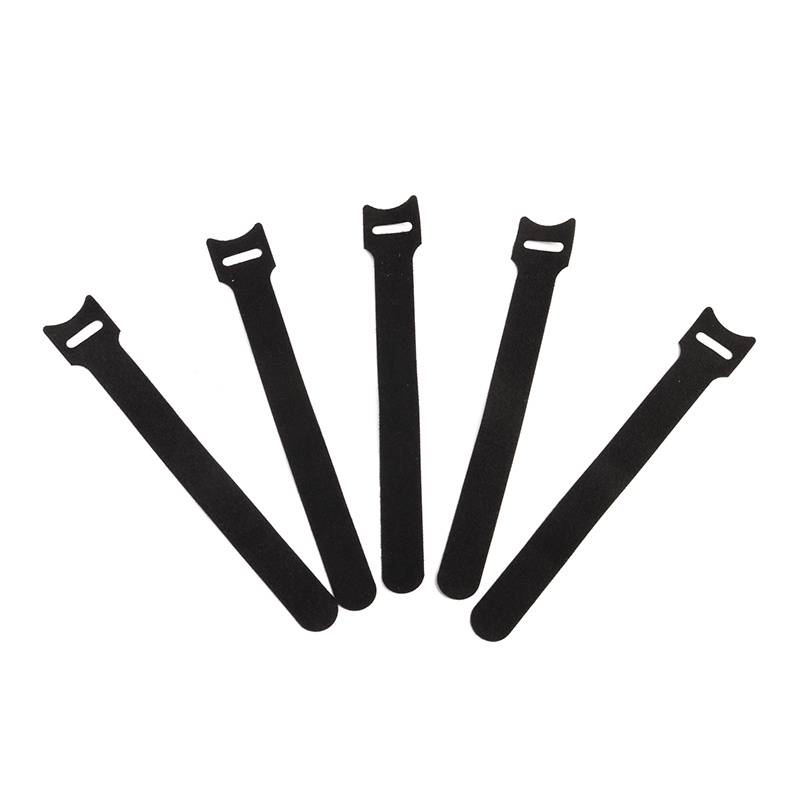 View MoreMagic Reusable Cable Ties
-
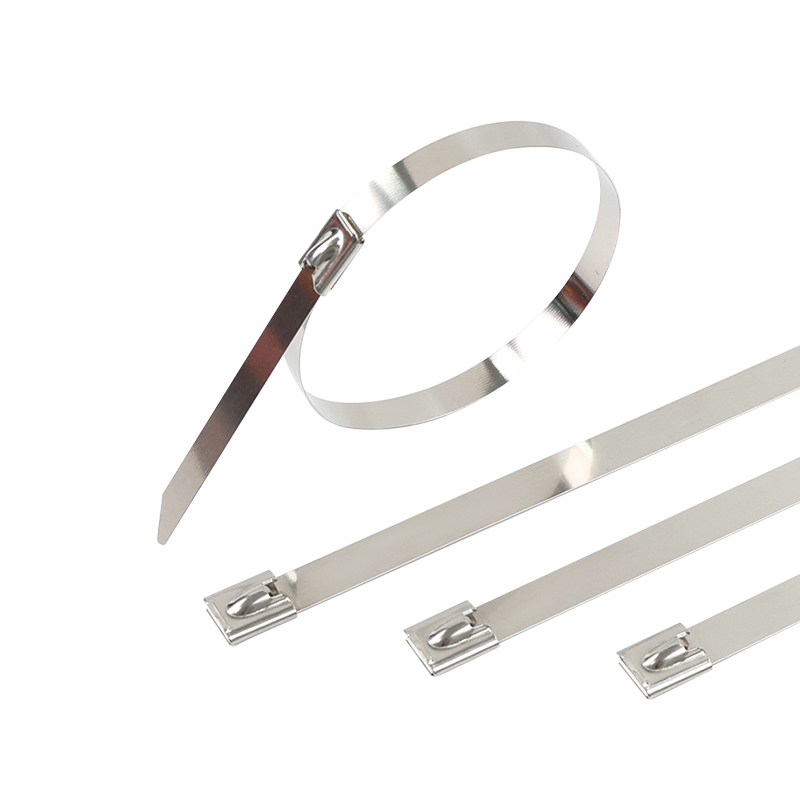 View MoreStainless Steel Self Locking Cable Ties
-
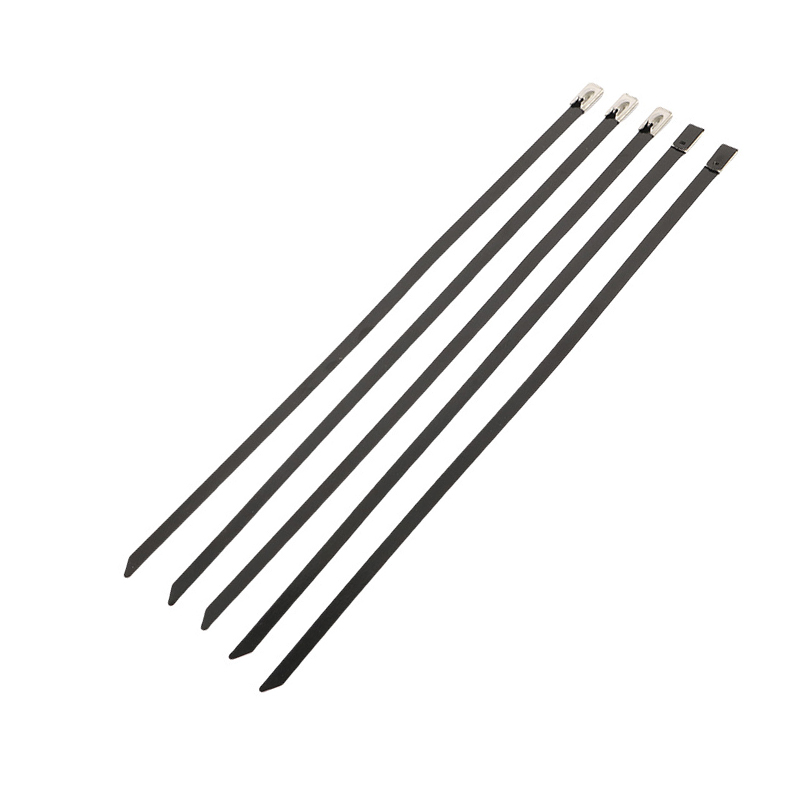 View MorePVC Coated Stainless Steel Cable Ties
-
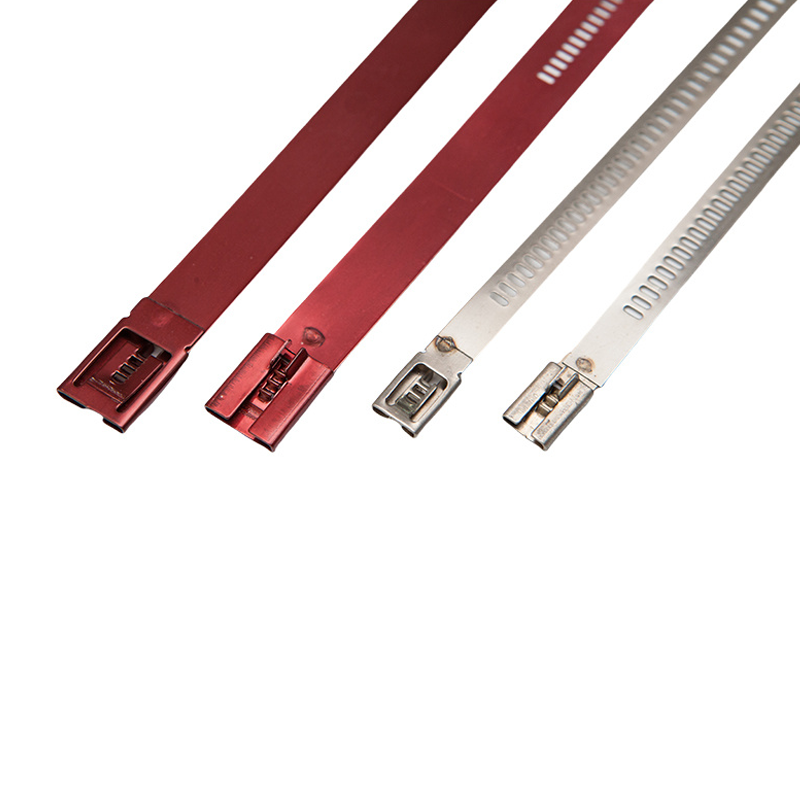 View MoreMulti Lock Stainless Steel Cable Ties
-
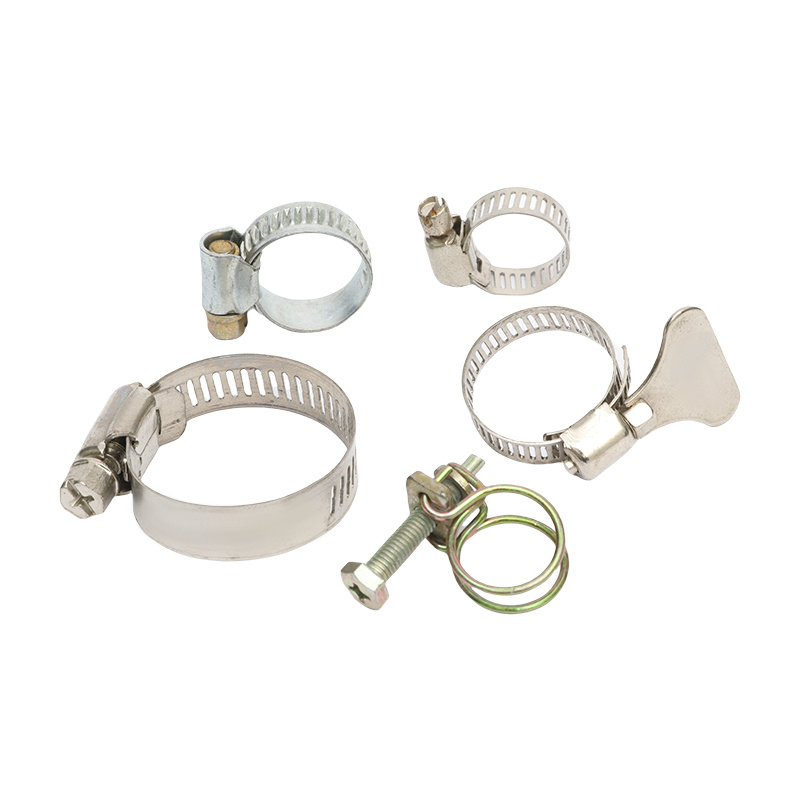 View MoreStainless Steel Hose Clamps
-
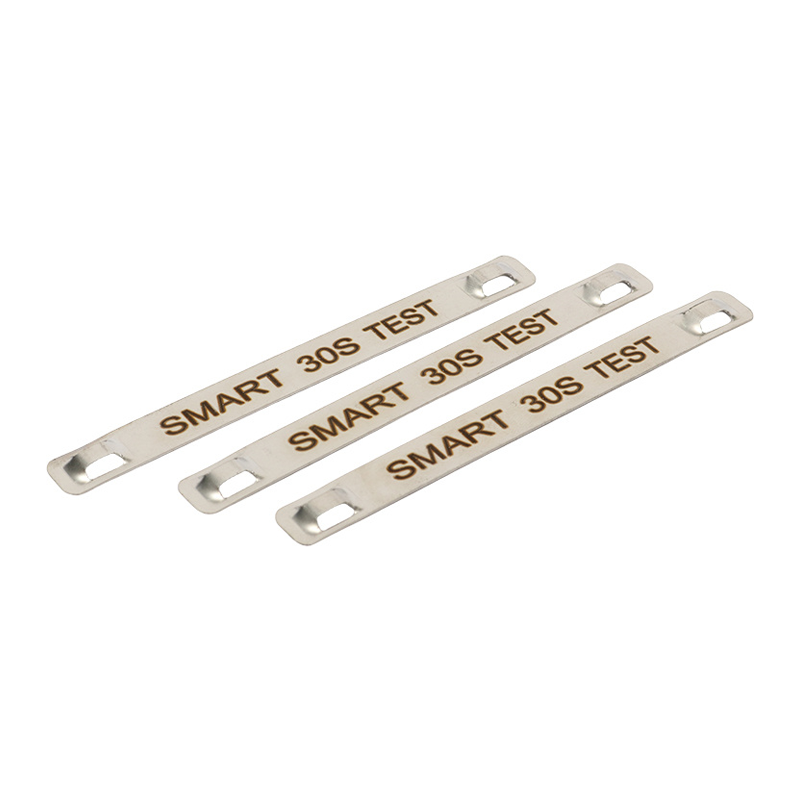 View MoreStainless Steel Cable Tie Markers
 LET'S CREATE THE FUTURE TOGETHER

Contact Us Anytime
Our Location
No. 57, Yufang Road, Yangming Sub-district, Yuyao City, Ningbo City, Zhejiang Province, China.


Product Categories
Contact Us
bella@szsplastic.com
+86-15105741066
ivy@szsplastic.com
+86-15958801211
sabrina@szsplastic.com
+86-15205749066
vivian@szsplastic.com
+86-15158306808
allen@szsplastic.com
+86-15205748066
stella@szsplastic.com
+86-15990290008
dora@szsplastic.com
+86-15990281608
pepo@szsplastic.com
+86-15958801191
Copyright © NINGBO SANZHENG PLASTIC CO., LTD. All Rights
Reserved.
