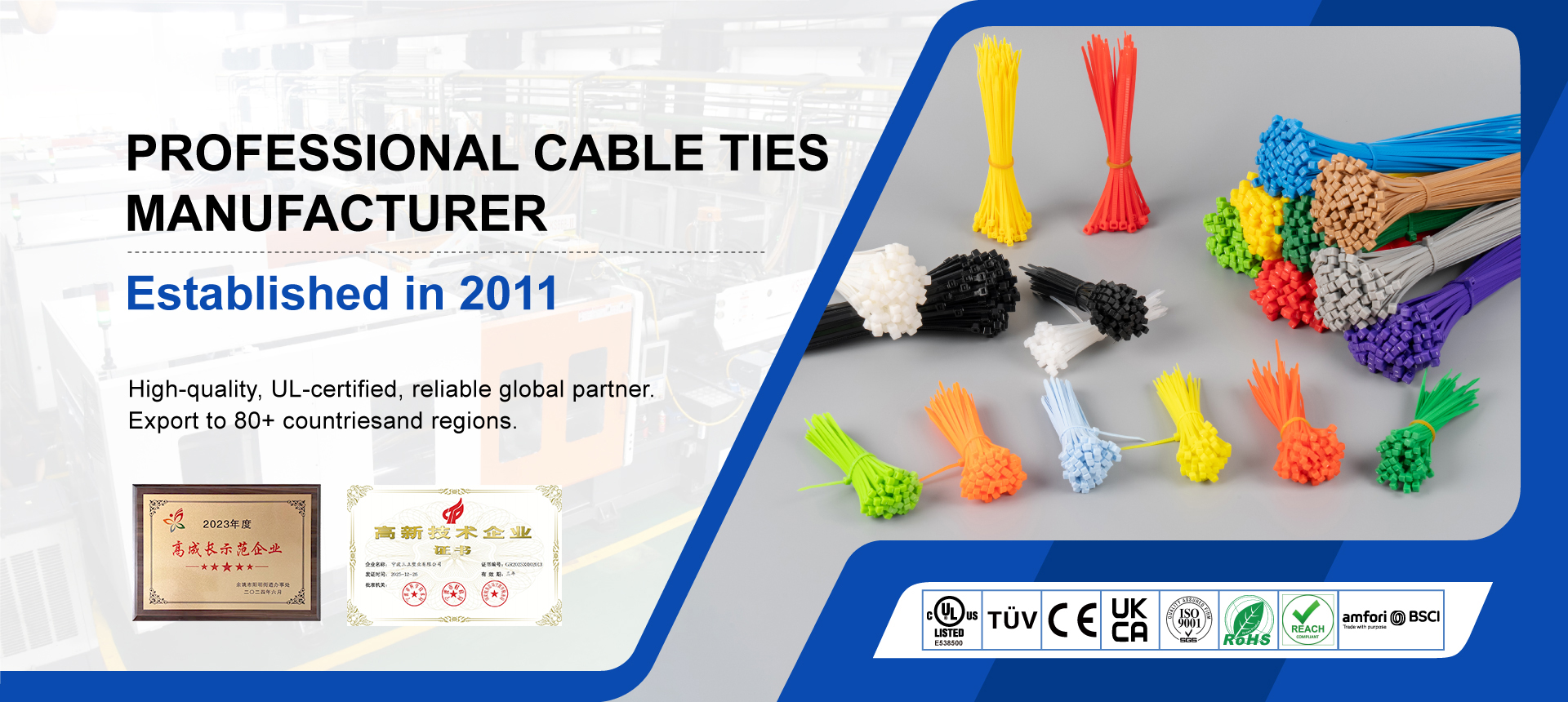
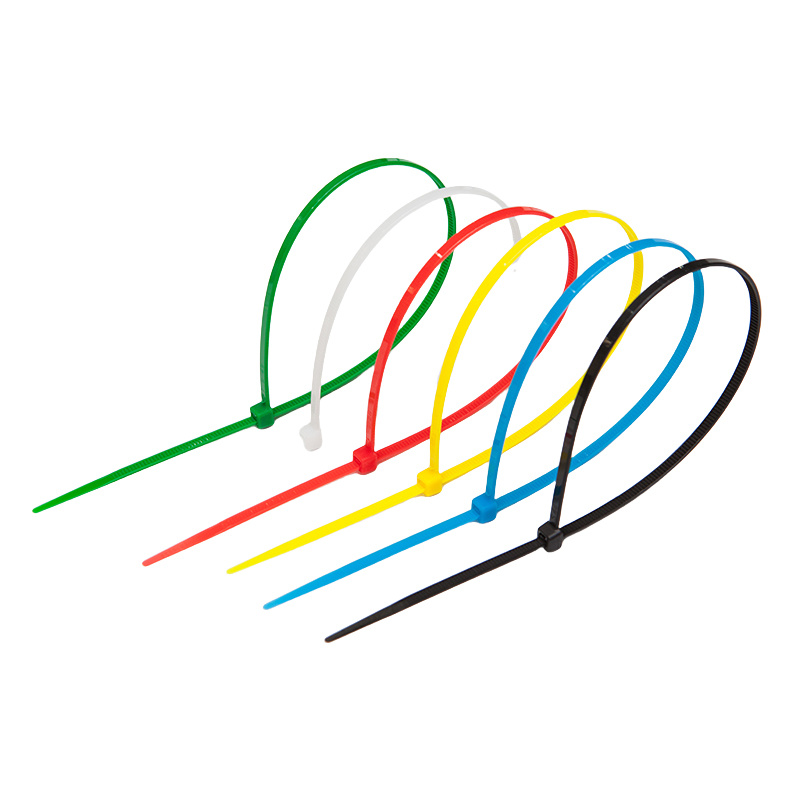
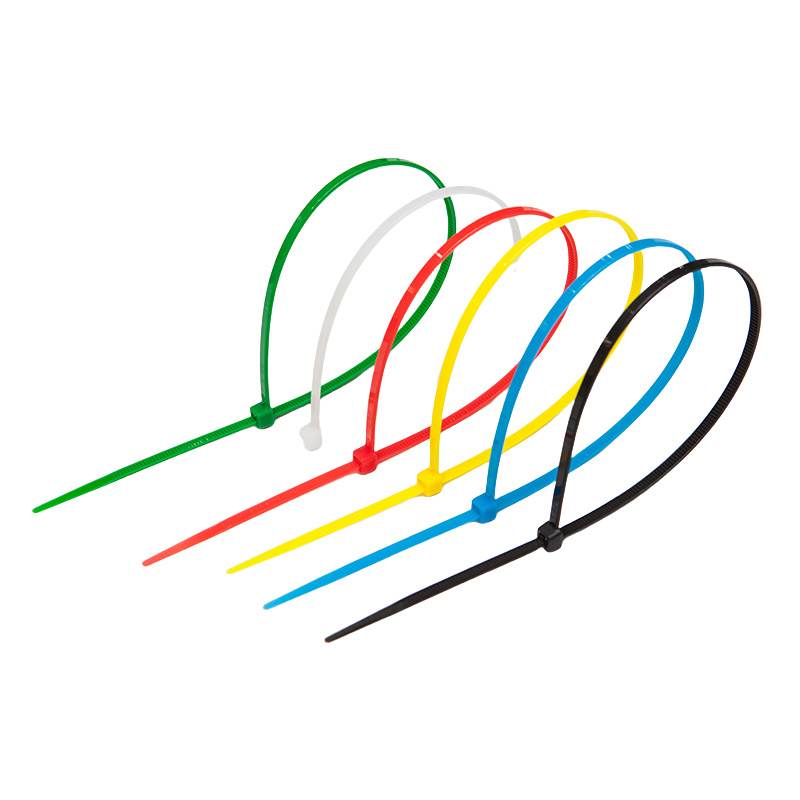
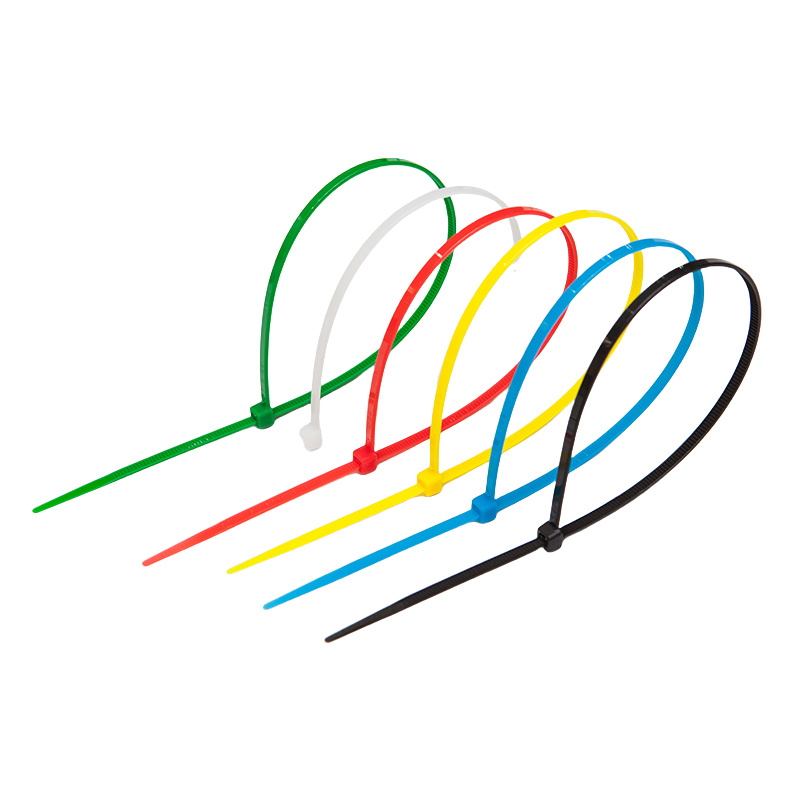
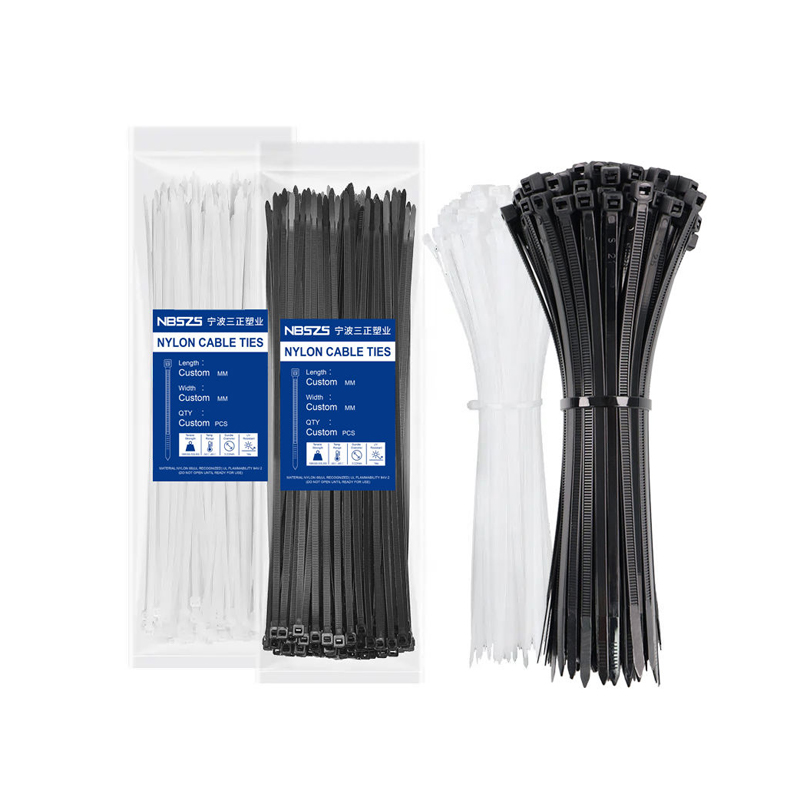
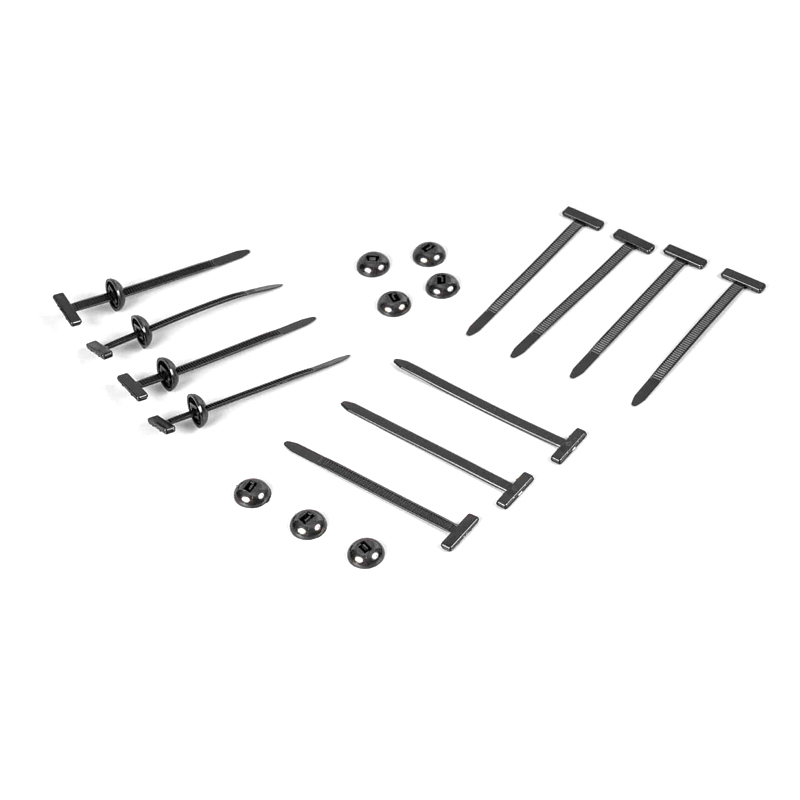
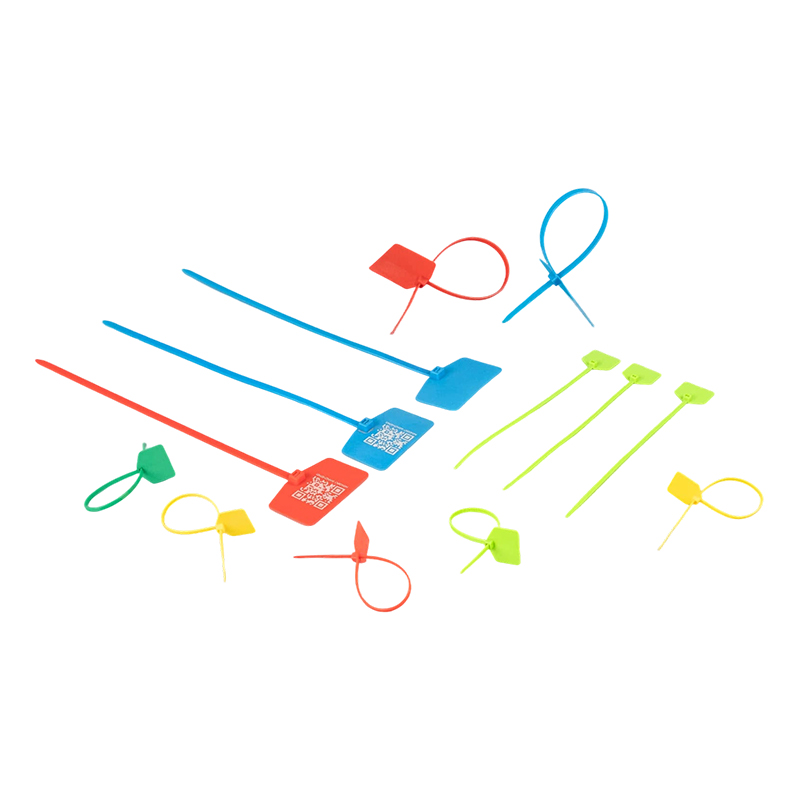
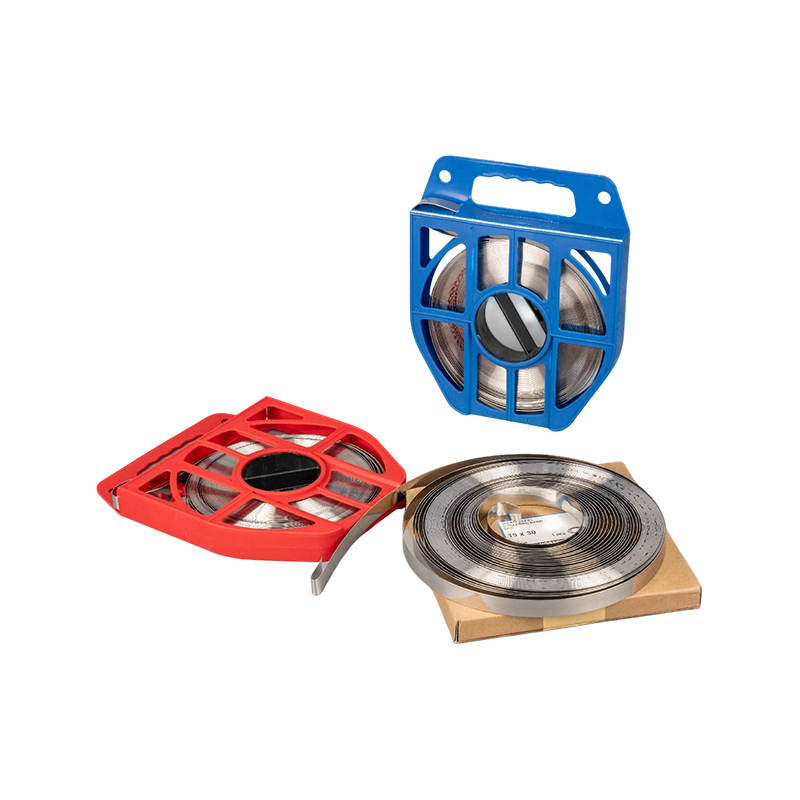
• Nylon Cable Ties
subtitle Product Classification and Main Promotion subtitle

Provide A One-Stop Solution for Electrical Connections and Wire Harness Management

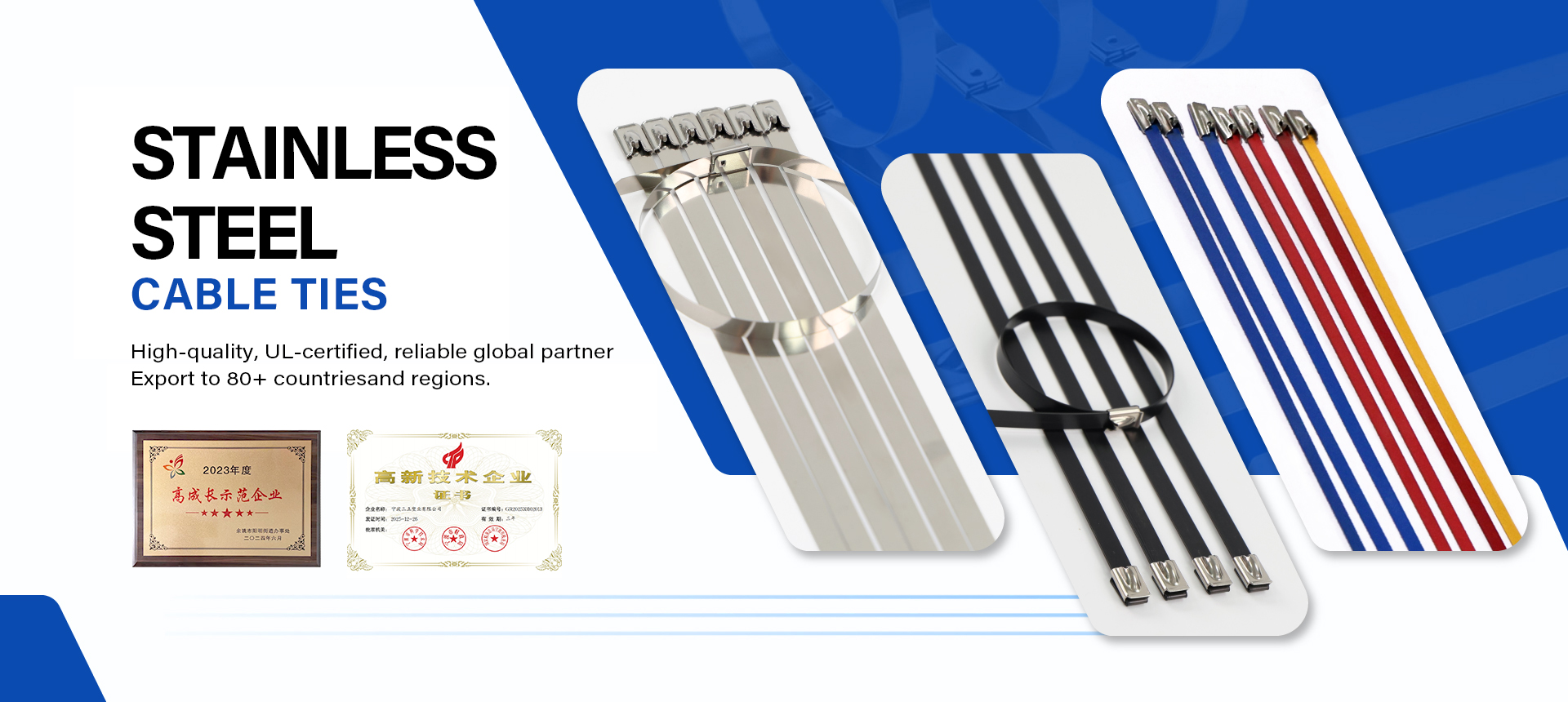
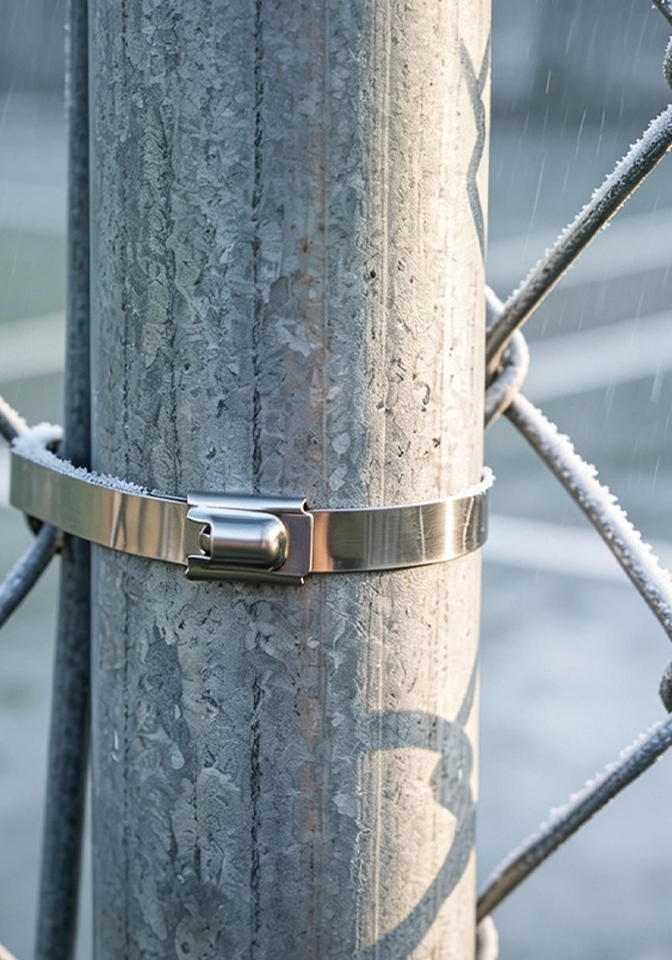
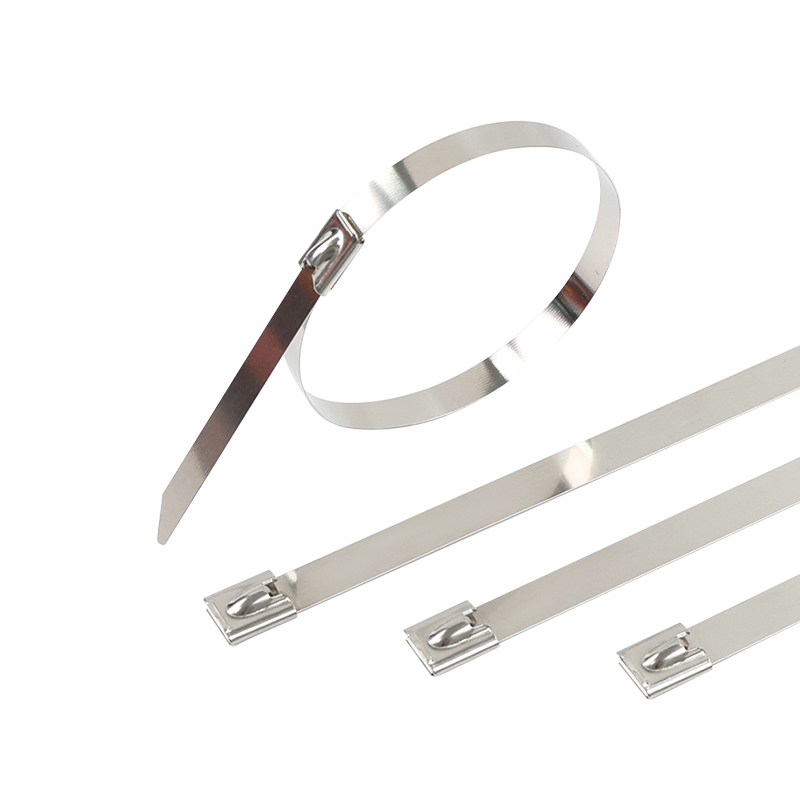
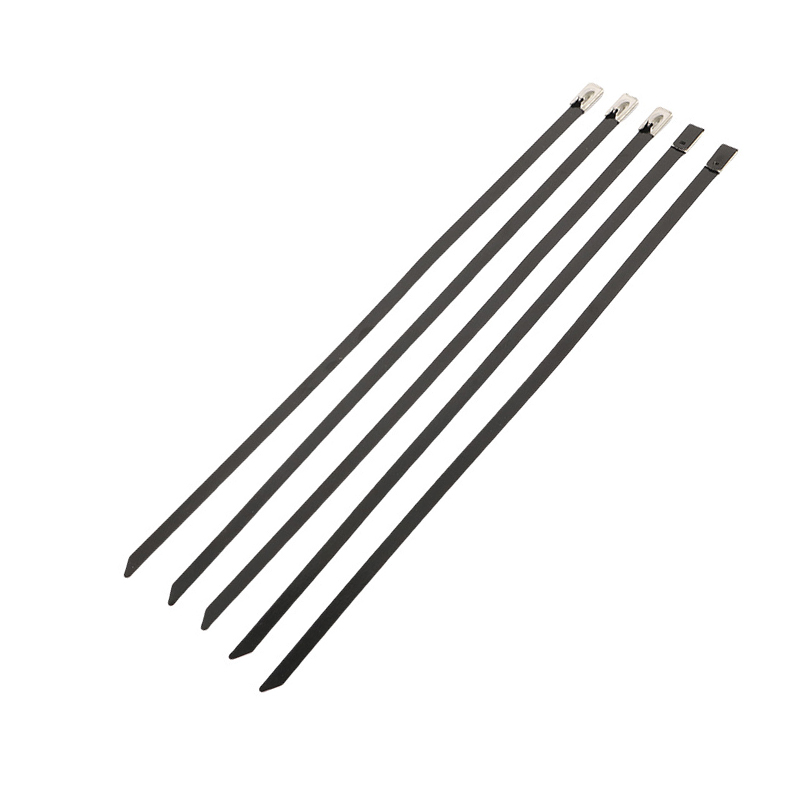
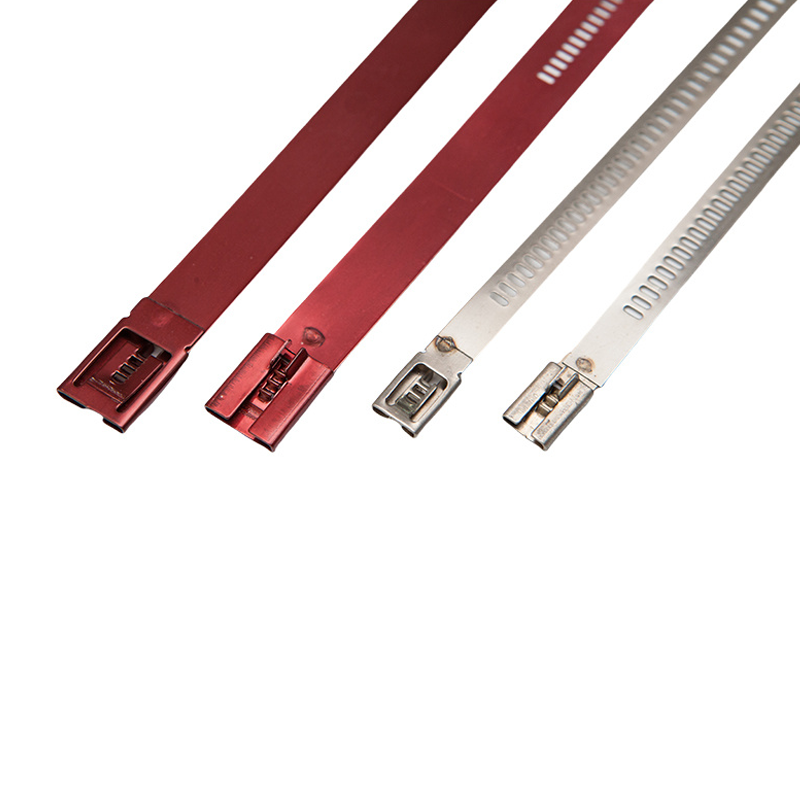
  • Stainless Steel Cable Ties
subtitle Product Classification and Main Promotion subtitle

Provide A One-Stop Solution for Electrical Connections and Wire Harness Management

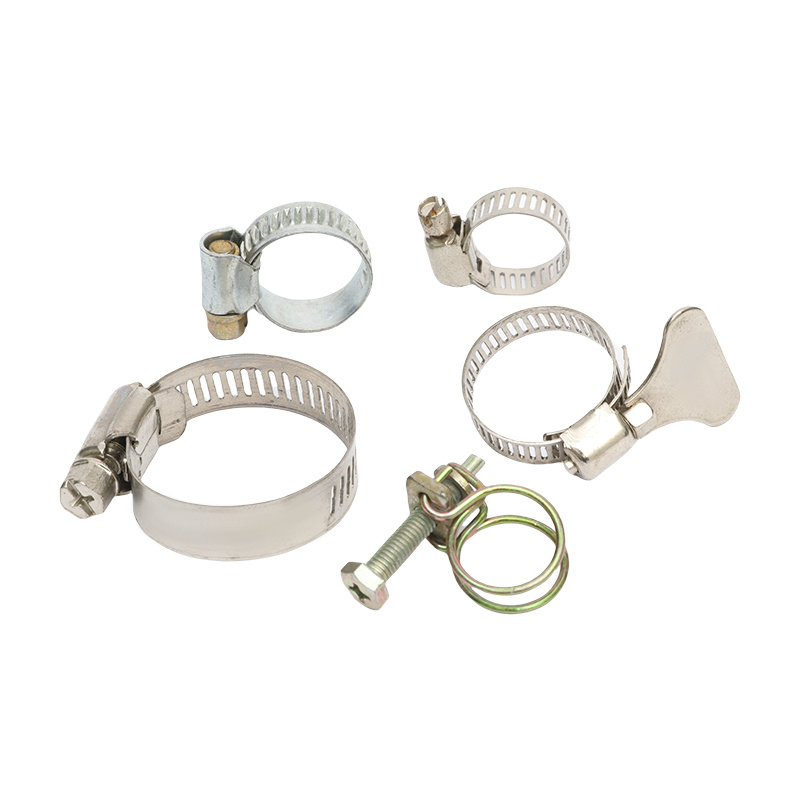
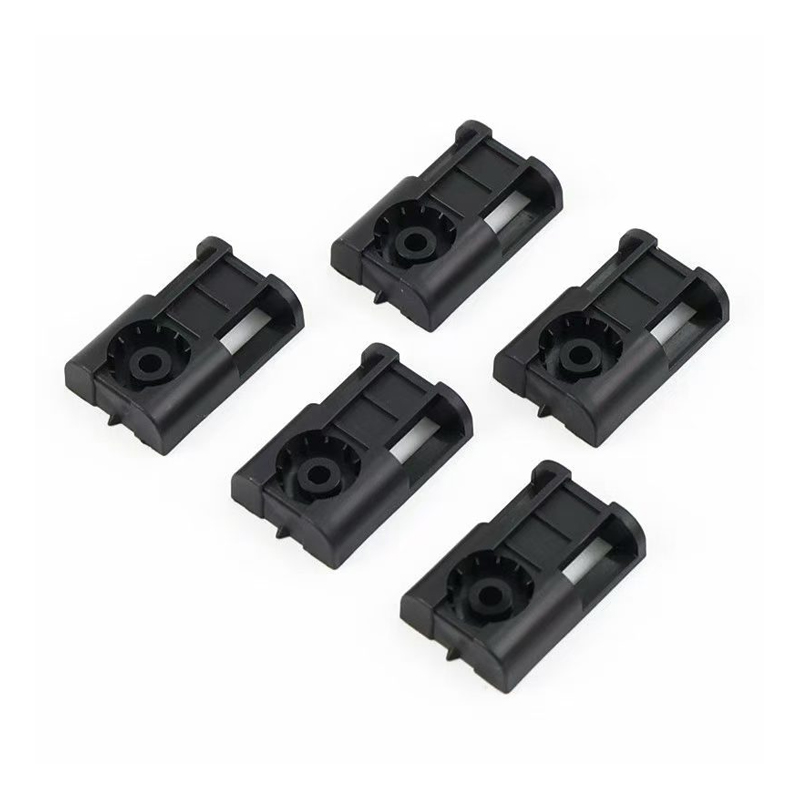
  • Cable Clips
subtitle Product Classification and Main Promotion subtitle

Provide A One-Stop Solution for Electrical Connections and Wire Harness Management

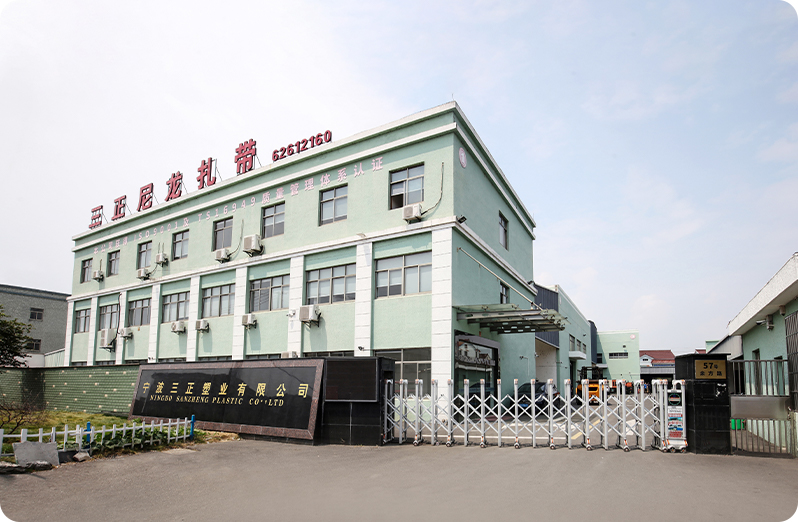
NINGBO SANZHENG PLASTIC CO., LTD.
subtitle COMPANY PROFILE subtitle

About NBSZS

2011 YEARS

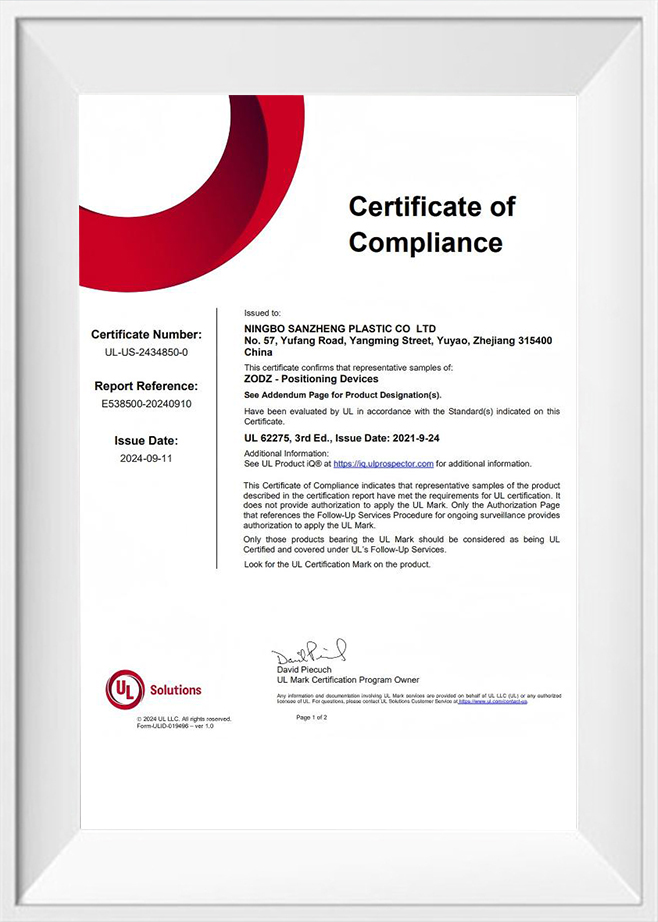
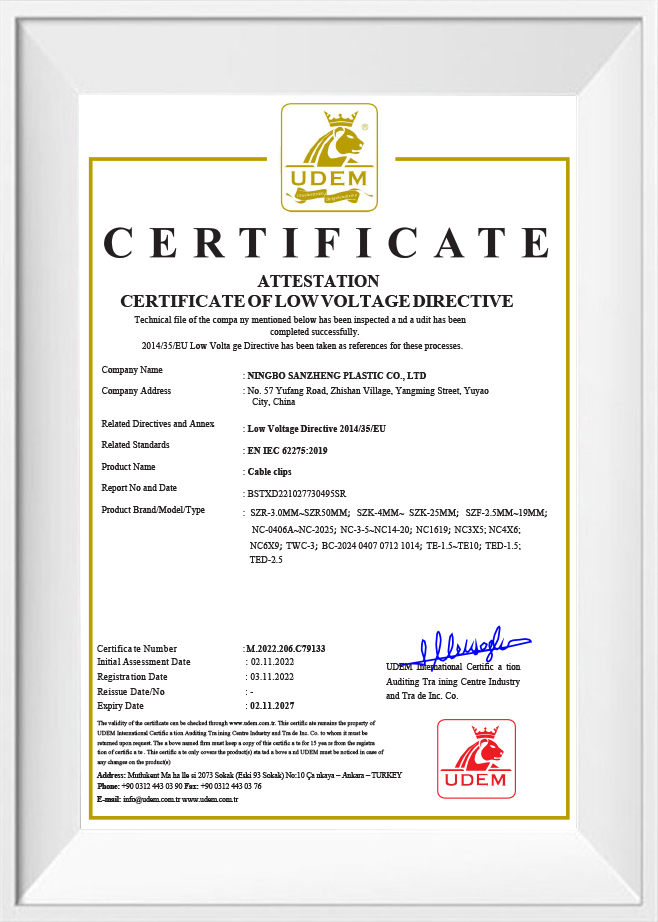
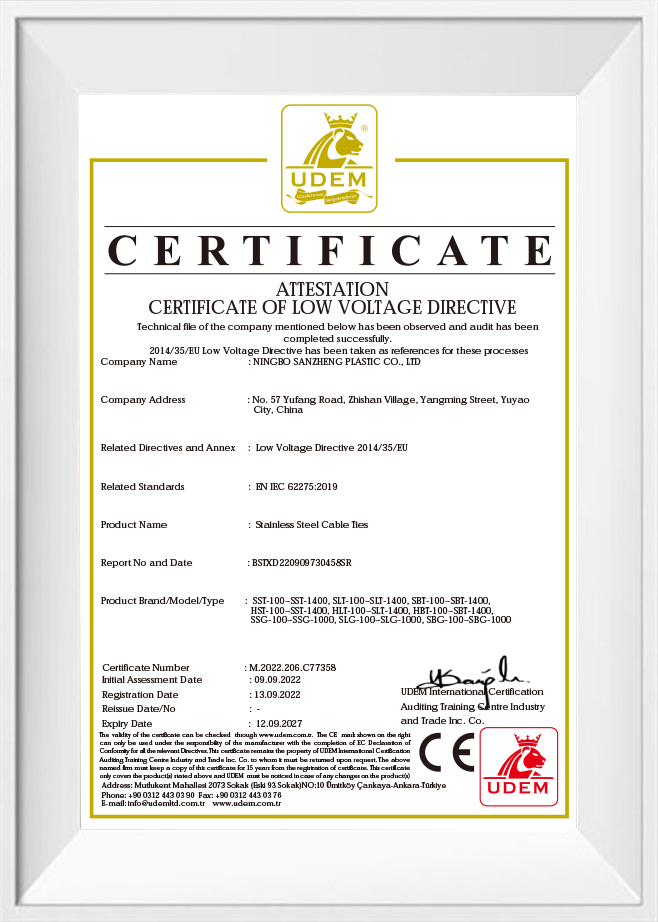
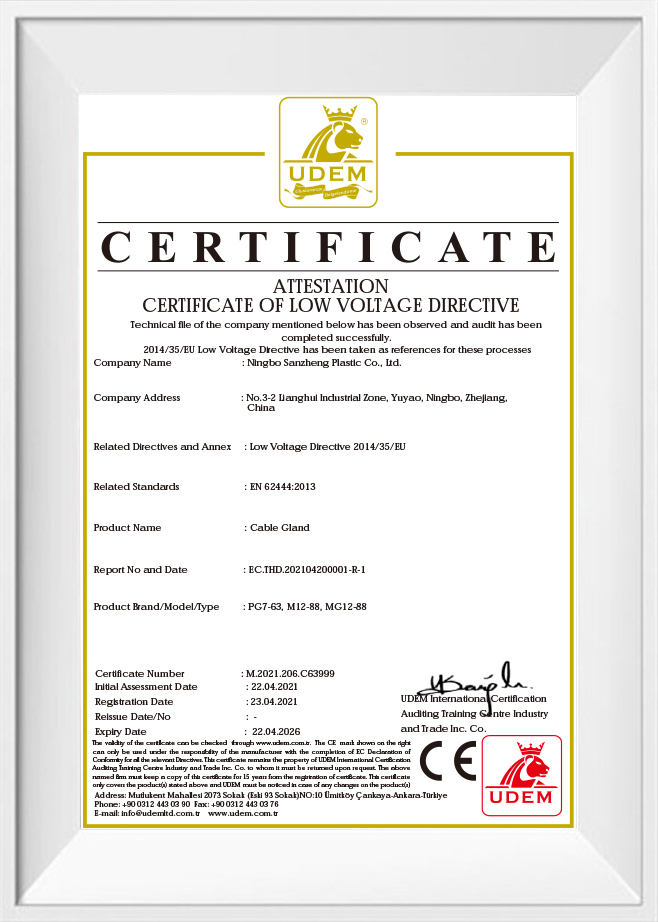
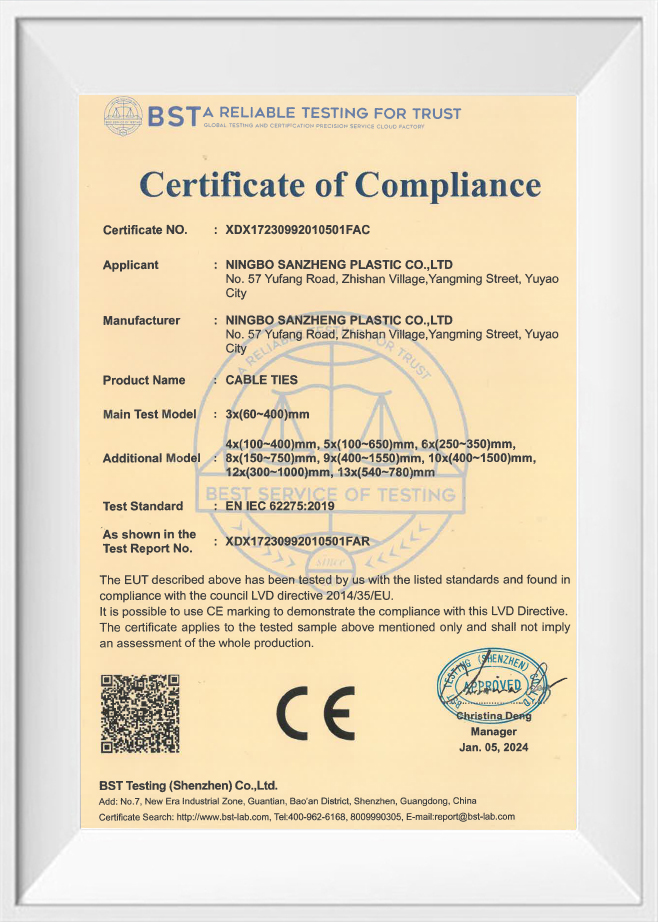
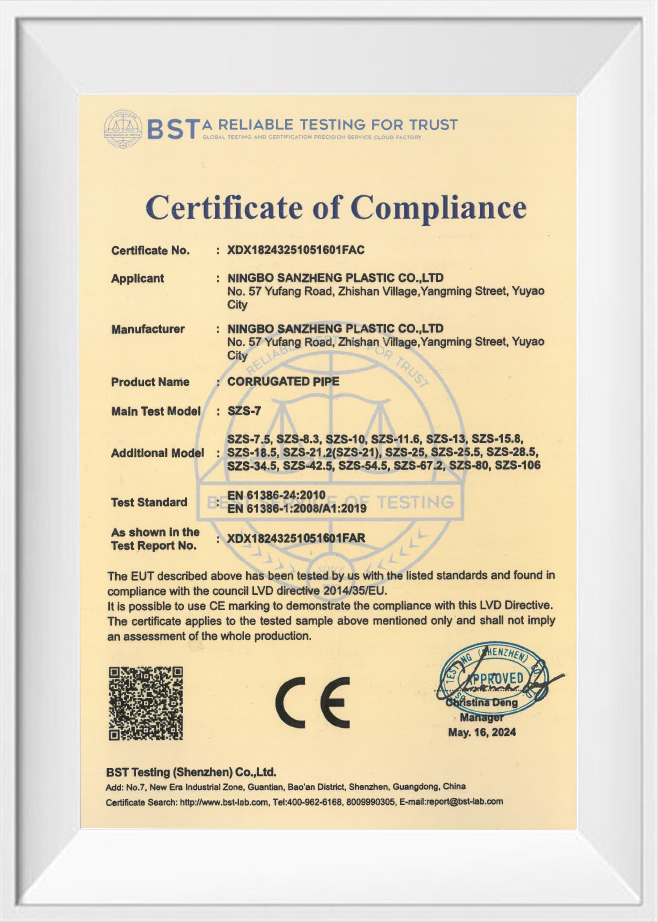
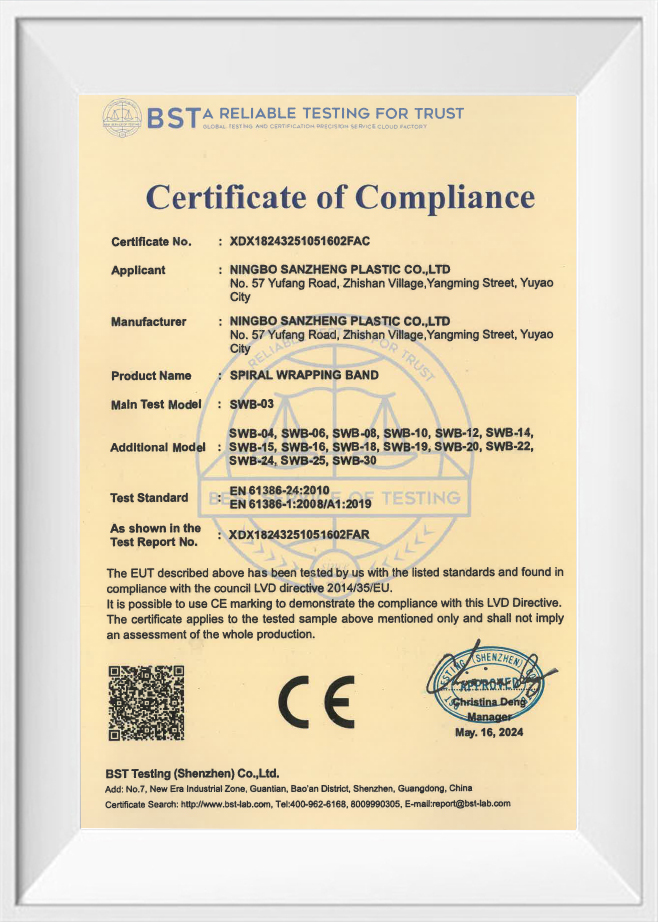
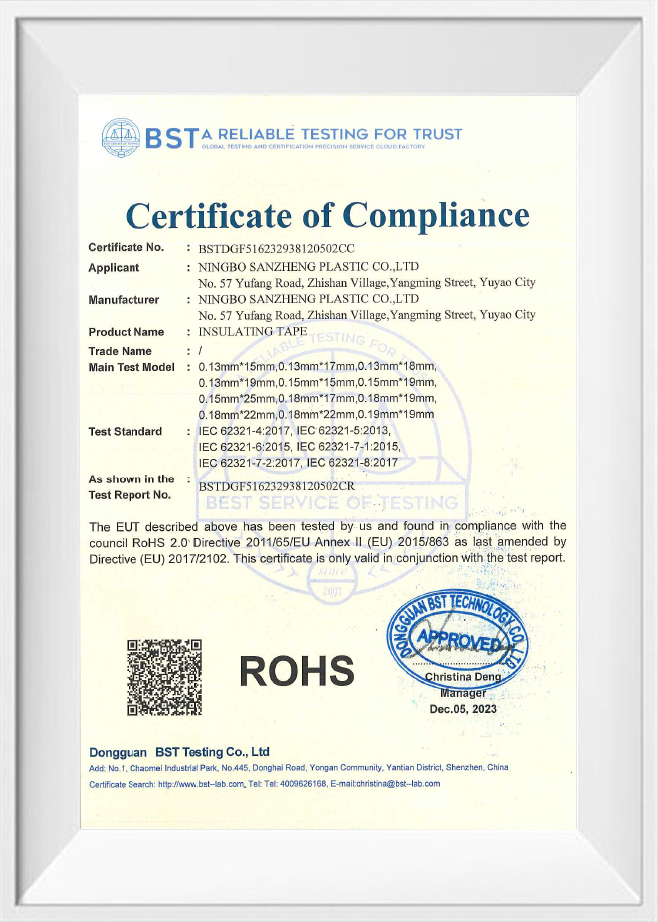
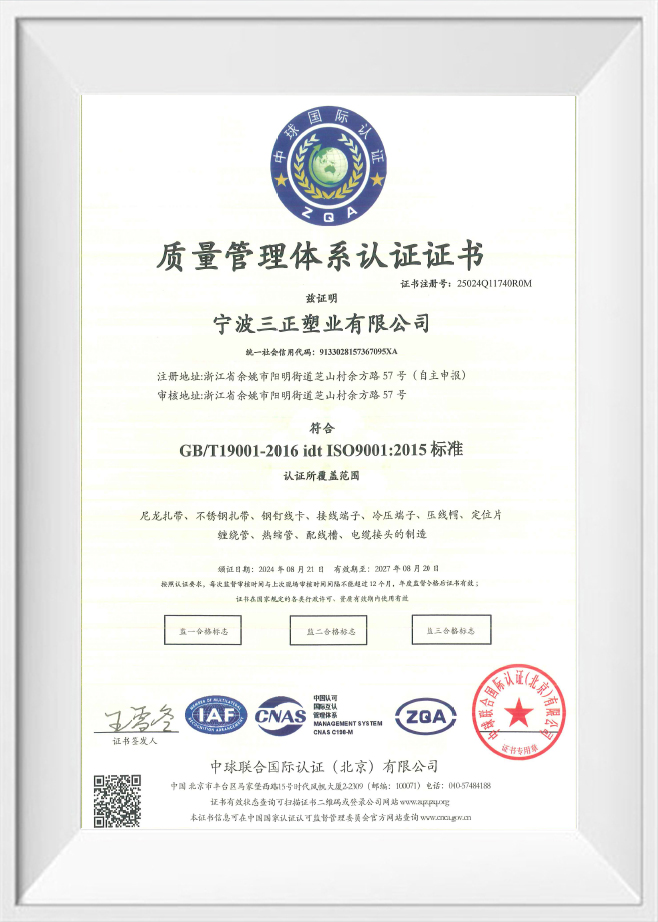
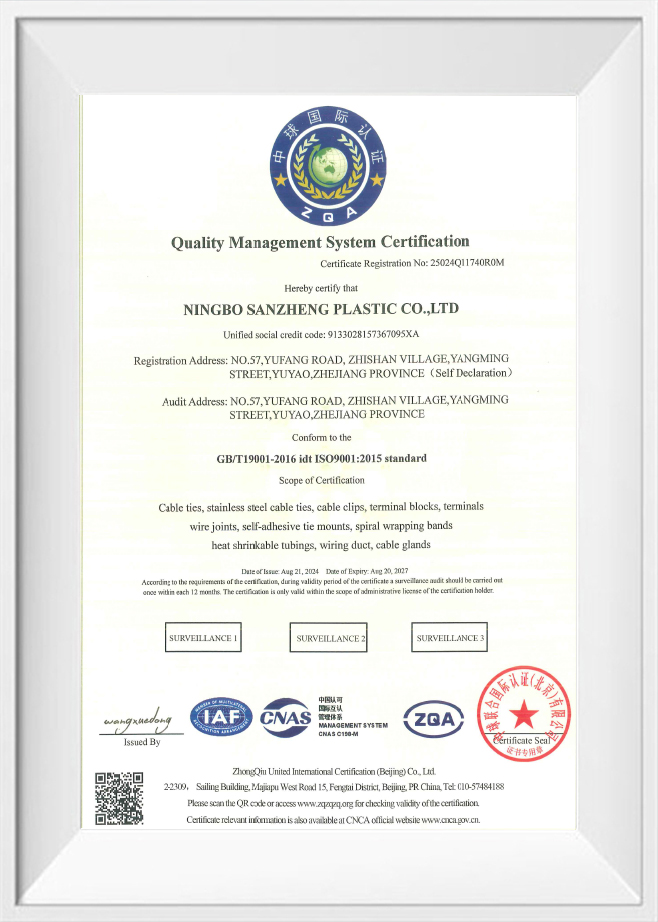
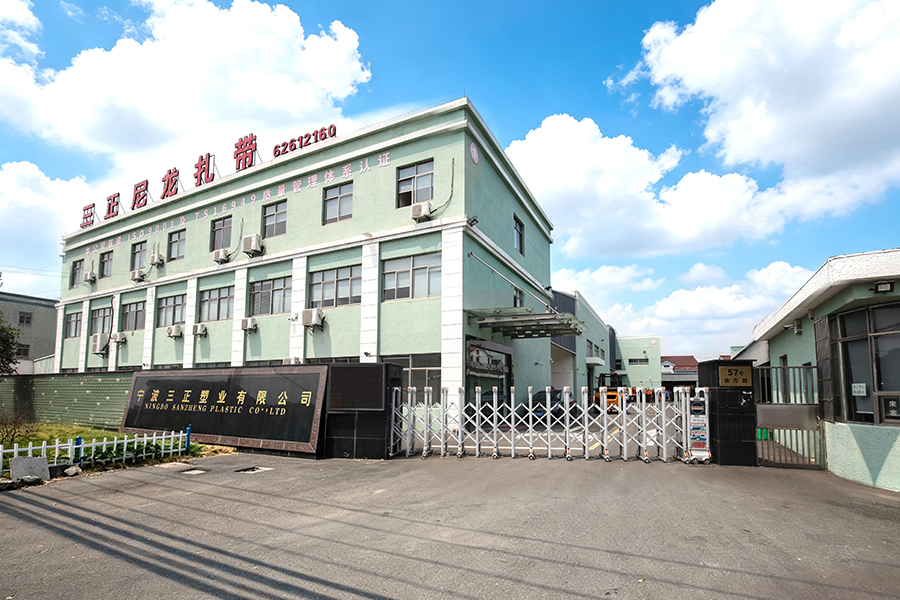
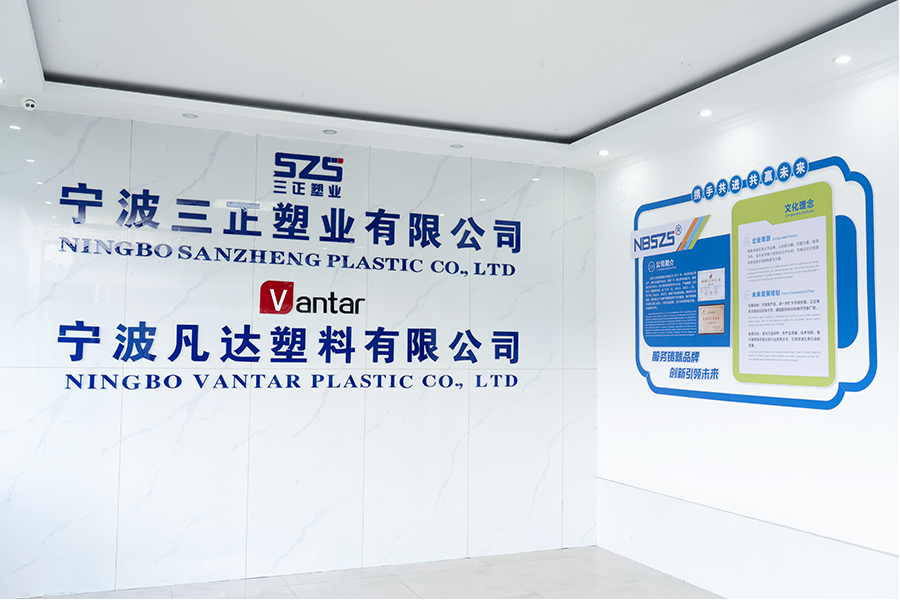
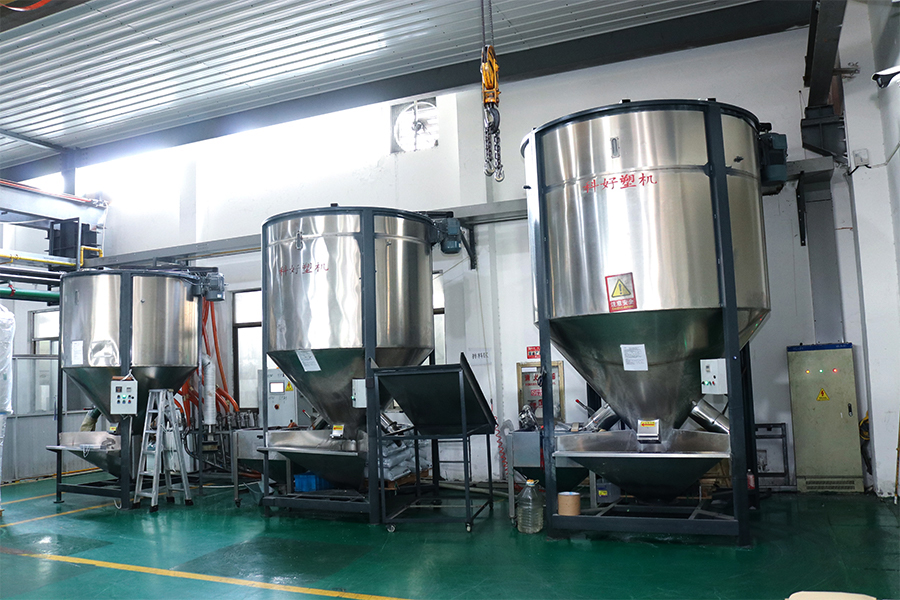
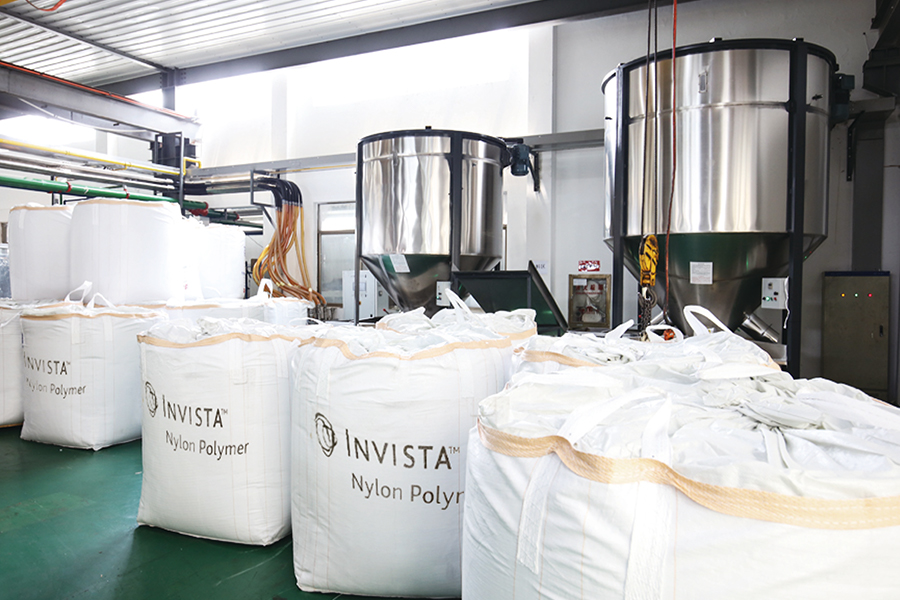
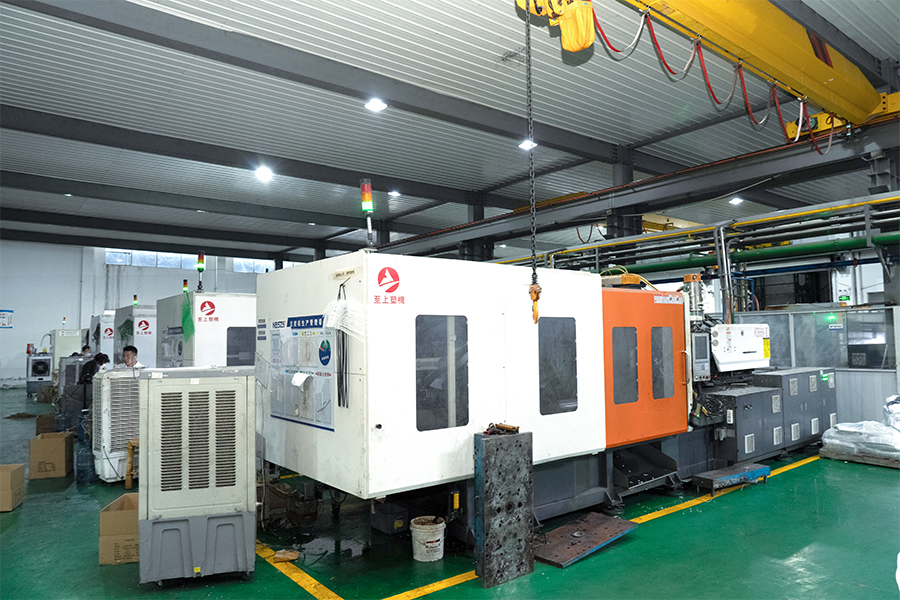
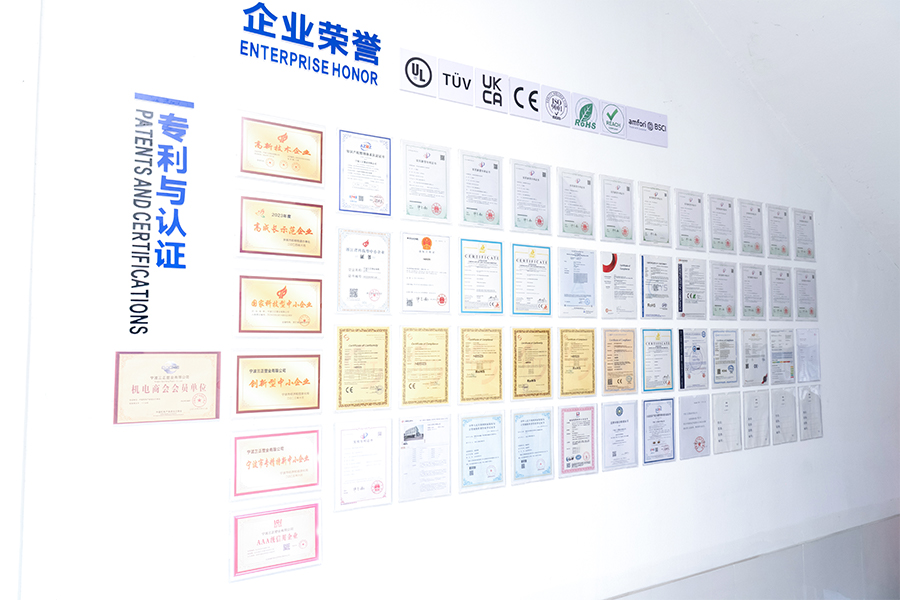
Ningbo Sanzheng Plastic Co., Ltd. was established in 2011, specializing in the production of nylon cable ties. Driven by innovation, we have been honored with 15 patents for cable ties, demonstrating strong technical strength. As a national high-tech enterprise, we strictly adhere to international standards such as ISO9001 and have obtained certificates like TUV, UL, UKCA, BSCI, CE, ROHS, and REACH, ensuring the outstanding quality of our products. Upholding responsibility and unity, we are dedicated to providing customers with high-quality products and services. We will continue to march on the path of innovation, constantly strive for progress, and contribute to the development of the industry and to create a splendid future together.

VIEW MORE
  • subtitle
  • subtitle
  • subtitle
  • subtitle
  • subtitle
  • subtitle
  • subtitle
  • subtitle
  • subtitle
  • subtitle
  • subtitle
  • subtitle
  • subtitle
subtitle Quality Commitment subtitle

Quality and Sustainability You Can Verify

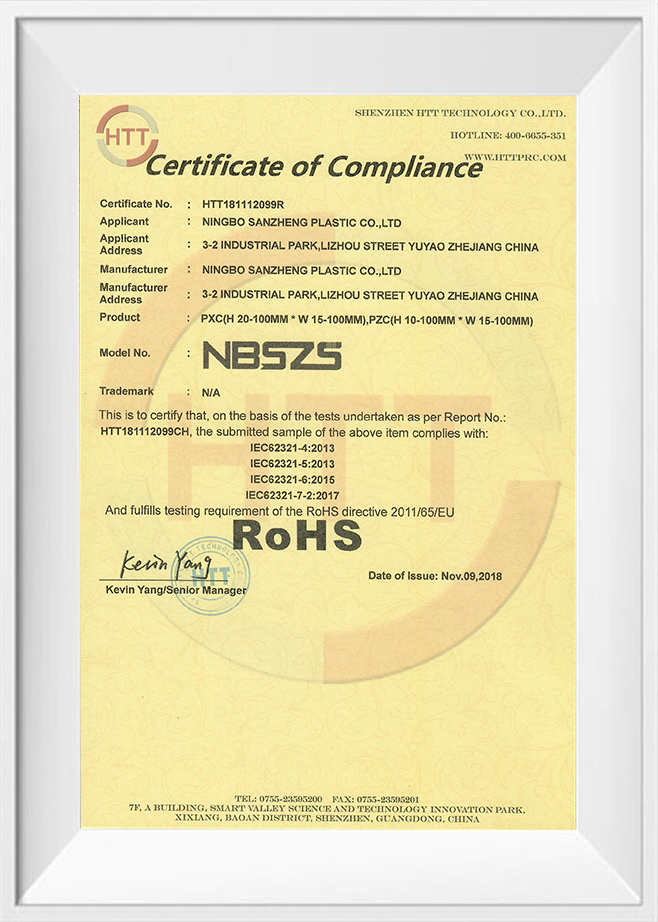
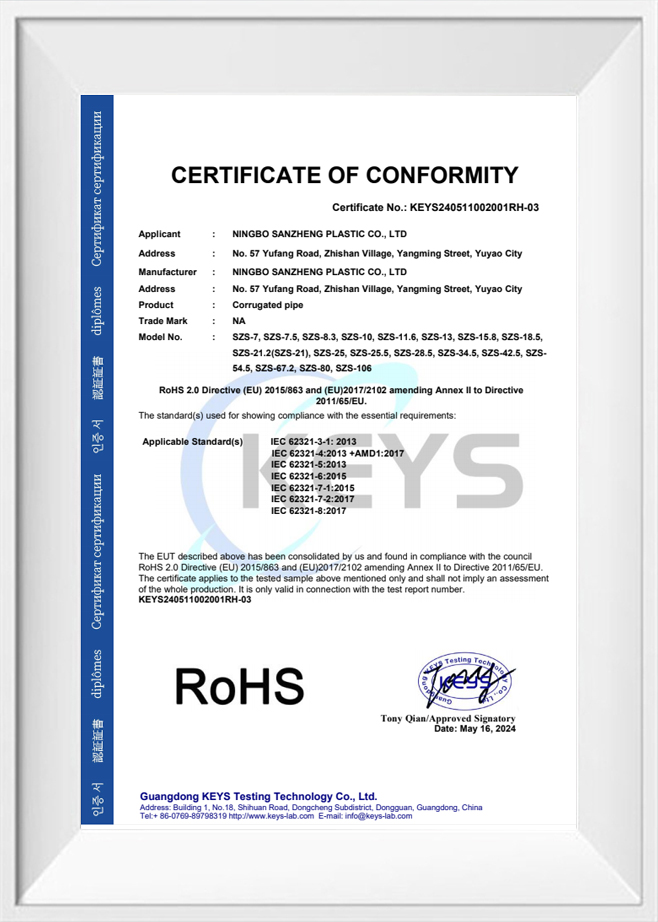
ROHS Certificate of Compliance
UL Certificate of Compliance
CE Cable clips
CE -stainless steel cable ties
Cable glands-CE
CE-CABLE-TIE
Certificate of Compliance
Insulating-tape-ROHS
ISO-9001
ISO-9001
Model KEYS240511002, Corrugated Pipe & RoHS Certificate
subtitle NEWS CENTER subtitle

Keep Up To Date With Our Latest News

  • Industry News
    Heat Stabilized Cable Ties for High Temperature Applications
    Heat stabilized cable ties are nylon ties formulated with additives that slow thermal degradation, allowing them to maintain tensile strength and locking performance in environments where standard nylon would become brittle or soften. The effect depends on the stabilization package and the base polymer: heat-stabilized PA66 is commonly rated for continuous use up to 105–120°C, while specialized grades using PA46 can reach 150°C. These ties are used in automotive engine compartments, HVAC equipment, electrical panels, and industrial machinery — anywhere standard nylon ties would fail prematurely. This guide explains how heat stabilization works, what temperature ratings actually mean, and how to select the right tie for a hot environment. To see the full range of nylon cable ties available, explore the full nylon cable tie range. 1. Why Standard Nylon Ties Fail Under Heat Nylon 6.6 begins to degrade when exposed to elevated temperatures for extended periods. The degradation is not a single event — it is a cumulative process driven by oxidation and molecular chain scission. At elevated temperatures, oxygen reacts with the polymer chain, forming hydroperoxides that break down into free radicals. These radicals attack adjacent polymer chains, reducing molecular weight and eventually causing embrittlement, discoloration, and loss of tensile strength. The process accelerates as temperature increases: a rule of thumb in polymer science is that reaction rates roughly double for every 10°C rise in temperature. For a cable tie, this means a standard PA66 tie that performs well at 23°C may lose a significant portion of its tensile strength after months at 100°C or above. The locking mechanism may also be affected if the material softens or becomes brittle. Visual inspection is not reliable — a tie can look intact while its molecular structure has already been compromised. 2. What Heat Stabilizers Do Heat stabilizers are additive packages that interrupt the thermal oxidation process. They work through two primary mechanisms: Free radical scavenging — Antioxidants, particularly hindered phenols and phosphites, react with the free radicals formed during thermal exposure, converting them into stable species before they can attack the polymer chain. This slows the chain scission process that leads to embrittlement. Peroxide decomposition — Secondary antioxidants decompose hydroperoxides into non-radical products, preventing them from breaking down into additional free radicals. This extends the induction period before degradation becomes measurable. In cable ties, the stabilization package is incorporated into the nylon compound during compounding, before injection molding. The additives are distributed throughout the material, providing protection from the surface inward. However, stabilizers are consumed over time — once depleted, degradation proceeds at the rate of the unstabilized polymer. This is why heat-stabilized ties have a finite service life at temperature, not an unlimited one. 3. Heat Stabilization and UV Stabilization Are Not the Same A common assumption is that a “stabilized” tie is protected against all environmental stressors. Heat stabilization and UV stabilization address different degradation mechanisms, and a tie stabilized for one may not be protected against the other. Stabilization Type Primary Stressor Addressed Mechanism Outdoor UV Protection Heat stabilization Thermal oxidation Antioxidants scavenge radicals formed by heat Not inherently UV stabilization Photo-oxidation HALS and UV absorbers intercept UV energy and neutralize degradation products Yes Heat + UV stabilization Both thermal and photo-oxidation Combined additive package Yes, with heat resistance Some products combine both packages, which is common in automotive and outdoor industrial applications where ties are exposed to heat and sunlight. However, a heat-stabilized tie without UV stabilization may still degrade rapidly in direct sunlight. Buyers should verify both properties independently when the application involves heat and outdoor exposure. For a detailed comparison of how base polymers respond to heat and moisture, compare PA66 and PA6 material properties. 4. What “Heat Stabilized” Temperature Ratings Actually Mean Temperature ratings on cable tie datasheets are not standardized across the industry, and the number alone does not guarantee performance. A rating typically reflects one of several test conditions: Continuous service temperature — The temperature at which the tie is expected to maintain a defined percentage of its initial tensile strength over a specified time. Intermittent peak temperature — A higher temperature the tie can survive for short periods without immediate failure. Heat ageing test temperature — The temperature used in an accelerated aging test, not necessarily the recommended service temperature. The same base polymer can carry different ratings depending on the stabilization package and the test protocol used. Heat-stabilized PA66 products are commonly rated for continuous use in the 105–120°C range, while some PA46-based products reach 150°C. A higher number on a datasheet is not automatically better — it may reflect a shorter test duration or a different failure criterion. 5. Common Temperature Ranges for Heat-Stabilized Ties Material / Grade Typical Continuous Rating Notes Standard PA66 (unstabilized) 85°C General-purpose nylon Heat-stabilized PA66 105–120°C Most common heat-stabilized grade Heat-stabilized PA46 150°C Higher-temperature base polymer Heat-stabilized PA66 with high-performance package Application-dependent Verify test data with supplier PTFE Up to 260°C Fluoropolymer; different property profile   For applications approaching or exceeding the upper end of heat-stabilized PA66 capability, alternative materials may be required. To compare options, review high-performance material options. 6. Where Heat-Stabilized Ties Are Used Heat-stabilized ties are specified where standard nylon would degrade faster than the maintenance interval or the product lifetime: Automotive — Engine compartments, exhaust-adjacent routing, and under-hood wiring harnesses expose ties to sustained heat and thermal cycling. Heat-stabilized PA66 is commonly used in these locations, though temperatures near exhaust components may exceed its rating and require alternative materials. HVAC — Heating units, ductwork, and air-handling equipment expose ties to warm air streams and localized heat. Heat-stabilized ties are used to secure wiring, sensors, and insulation in these assemblies. Electrical panels and control cabinets — Heat buildup from transformers, drives, and power electronics can raise internal temperatures above ambient. Heat-stabilized ties maintain bundling integrity in these enclosures. Industrial machinery — Motors, pumps, and process equipment generate heat that degrades standard nylon over time. Heat-stabilized ties are used for cable and hose routing in these environments. Appliances — Ovens, heaters, and other heat-generating appliances use heat-stabilized ties internally where standard ties would fail. 7. Selection Checklist for High-Temperature Applications When specifying a tie for a hot environment, verify the following: Actual temperature profile — What is the continuous temperature? What are the peak temperatures and how long do they last? Rating basis — Is the published rating a continuous service temperature, an intermittent peak, or a heat-ageing test temperature? Stabilization package — Does the product combine heat and UV stabilization if both stressors are present? Tensile strength retention — Has the supplier provided data on strength retention after heat ageing, not just the initial tensile strength? Installation temperature — Some heat-stabilized ties have a minimum installation temperature (often around -10°C to -20°C); verify this if installation occurs in cold conditions. Chemical exposure — Heat and chemicals can interact; if the environment also involves oils, fuels, or solvents, verify compatibility. Certification — Some applications require UL, CSA, or industry-specific certifications; confirm the product carries the relevant approvals. If the temperature profile or chemical environment falls outside standard heat-stabilized PA66 capability, consult the technical team for material recommendations. 8. Common Mistakes to Avoid Mistake 1: Treating the temperature rating as a guarantee A rating is a test-based reference, not a performance guarantee under all conditions. Actual service life depends on the specific temperature profile, cycling, chemical exposure, and mechanical load. Mistake 2: Assuming heat stabilization covers UV exposure Heat stabilizers protect against thermal oxidation, not photo-oxidation. A heat-stabilized tie used outdoors without UV stabilization may still degrade rapidly in sunlight. Mistake 3: Using the highest rated tie without confirming the rating basis A 150°C rating may reflect a different test condition than a 105°C rating. Compare the test method and failure criteria, not just the number. Mistake 4: Ignoring installation temperature limits Some heat-stabilized ties are rated for high continuous service temperatures but have a minimum installation temperature around -10°C to -20°C. Installing them in colder conditions may cause cracking. Mistake 5: Overlooking stabilizer depletion Heat stabilizers are consumed over time. A tie that performs well in short-term testing may still degrade over years of continuous heat exposure. For long-life applications, request long-term heat-ageing data rather than relying on short-term ratings. FAQ Q: What temperature can heat-stabilized cable ties withstand?Heat-stabilized PA66 ties are commonly rated for continuous use up to 105–120°C. Heat-stabilized PA46 grades can reach 150°C. The actual rating depends on the specific stabilization package and test method used by the manufacturer. Q: What is the difference between heat-stabilized and standard nylon cable ties?Standard nylon ties begin to degrade faster at elevated temperatures. Heat-stabilized ties contain additives that slow thermal oxidation, allowing them to maintain tensile strength and locking performance for longer periods at temperatures that would shorten the life of standard ties. Q: Are heat-stabilized cable ties also UV-resistant?Not necessarily. Heat stabilization and UV stabilization address different degradation mechanisms. Some products combine both, but a heat-stabilized tie without UV stabilization may still degrade in sunlight. Verify both properties if the application involves heat and outdoor exposure. Q: Can heat-stabilized cable ties be used outdoors?They can be used outdoors if they also carry UV stabilization. Heat stabilization alone does not protect against photo-oxidation. For outdoor applications, select a product with both heat and UV stabilization, or consider PA12 or PTFE depending on temperature requirements. Q: What is the difference between heat-stabilized PA66 and PA46?PA66 is the more common base polymer and is heat-stabilized to 105–120°C. PA46 has a higher melting point and can be heat-stabilized to 150°C, but it is a different polymer with different processing and property characteristics. Q: How do I know if a heat-stabilized tie will last in my application?Request heat-ageing data from the supplier, including the test temperature, duration, and the percentage of tensile strength retained. For critical applications, consider independent testing under conditions that match the actual service environment. Q: Can heat-stabilized cable ties be used in automotive engine compartments?Yes, heat-stabilized PA66 ties are commonly used in under-hood and engine-compartment applications. However, locations near exhaust components may exceed the rating of PA66 and require PA46, PTFE, or metal ties. Q: What happens when a heat-stabilized cable tie reaches the end of its service life?The stabilizers are consumed, and the polymer begins to oxidize. The tie may become brittle, lose tensile strength, or fail at the locking mechanism. Visual inspection may not reveal the degradation until failure occurs. Q: Are heat-stabilized cable ties more expensive than standard ties?Yes. The additive package and the additional compounding and testing steps increase cost. The premium is justified in applications where standard ties would fail prematurely and require rework or maintenance. Q: What certifications should I look for in a heat-stabilized cable tie?Common certifications include UL, CSA, RoHS, and REACH. Some HVAC and automotive applications require specific approvals such as UL181B-C. Confirm the relevant certification for your industry. Conclusion Heat-stabilized cable ties extend the service life of nylon ties in elevated-temperature environments by slowing thermal oxidation through antioxidant additives. They are rated for continuous use in the 105–120°C range for PA66, with PA46 grades reaching 150°C. They are used in automotive, HVAC, electrical, and industrial applications where standard nylon would degrade prematurely. The most common mistakes are treating the temperature rating as an unconditional guarantee, assuming heat stabilization also provides UV protection, and overlooking stabilizer depletion over long service life. A heat-stabilized tie is not a permanent solution at temperature — it is a material designed to slow degradation for a defined period under specific conditions. For applications approaching or exceeding the upper end of heat-stabilized PA66 capability, alternative materials may be required. To compare high-temperature options beyond nylon, compare PTFE and nylon cable ties for extreme environments. To build a broader understanding of cable tie materials and selection, explore our guide on nylon cable tie types, materials, and applications. Disclaimer: The temperature ratings, material data, and stabilization information presented in this article are compiled from industry-standard references, supplier technical datasheets, and general polymer science knowledge for general informational purposes only. Actual product performance varies by manufacturer, stabilization package, test method, and application conditions. Buyers should request product-specific heat-ageing data and verify ratings against their actual temperature profile before specification.
    VIEW MORE
  • Industry News
    PTFE Cable Ties vs Nylon Cable Ties for Extreme Environments
    PTFE and nylon cable ties serve different ends of the performance spectrum. Nylon cable ties — typically PA66 or PA6 — offer good mechanical strength, moderate temperature resistance, and low cost for general-purpose applications. PTFE cable ties offer exceptional chemical resistance, a wider operating temperature range, and near-zero moisture absorption, but at significantly higher cost and lower tensile strength. The choice depends on whether the application demands extreme chemical or thermal performance that nylon cannot deliver. This guide compares PTFE and nylon cable ties across key performance dimensions to help buyers determine which material fits their environment. To see the full range of nylon cable ties available, explore the full nylon cable tie range. 1. What Is PTFE and Why Is It Used in Cable Ties? PTFE (polytetrafluoroethylene) is a fluoropolymer made of carbon and fluorine atoms. The carbon-fluorine bond is one of the strongest in organic chemistry, which gives PTFE its exceptional chemical inertness and thermal stability. PTFE is commonly known by the brand name Teflon. PTFE cable ties are used in applications where standard nylon ties would fail — such as chemical processing plants, semiconductor manufacturing, pharmaceutical production, and high-temperature industrial processes. The material's inertness means it does not react with most chemicals, and its thermal stability allows it to operate at temperatures that would melt or degrade nylon. However, PTFE also has limitations. It has lower tensile strength than nylon, it is significantly more expensive, and it is softer, which can affect locking mechanism performance in high-load applications. 2. PTFE vs Nylon: Property Comparison Property PTFE Nylon (PA66) Nylon (PA6) Operating Temperature -70 to +260°C -40 to +85°C (modified: -60 to +150°C) -40 to +80°C Chemical Resistance Excellent Moderate Moderate Water Absorption < 0.01% 2.50% 3.50% Tensile Strength Lower Higher Good Flexibility Moderate Good Higher UV Resistance Excellent Poor (requires stabilization) Poor (requires stabilization) Abrasion Resistance Lower Good Good Cost Significantly higher Lower Lower Flammability UL94 V-0 UL94 V-2 (standard) UL94 V-2 (standard) Dielectric Strength Excellent Good Good 3. Temperature Performance: Where PTFE Excels PTFE cable ties operate from -70°C to +260°C — a range that far exceeds the capabilities of standard nylon. This makes PTFE suitable for applications involving: High-temperature industrial processes (furnaces, ovens, heat exchangers) Cryogenic environments (liquid nitrogen, cold chain at extreme temperatures) Aerospace and defense systems Semiconductor manufacturing equipment Nylon cable ties — even heat-stabilized grades — have a lower operating ceiling. Standard PA66 operates from -40°C to +85°C. Modified heat-stabilized grades extend this to -60°C to +150°C, but still fall short of PTFE's upper limit. For applications that fluctuate between extreme hot and cold, PTFE maintains consistent mechanical properties across the entire range. Nylon may become brittle at the low end or soften at the high end, depending on the formulation. To compare how different nylon grades handle temperature extremes, compare PA66 and PA6 material properties. 4. Chemical Resistance: PTFE's Core Advantage PTFE is chemically inert to virtually all industrial chemicals, including: Strong acids (sulfuric, nitric, hydrochloric) Strong bases (sodium hydroxide, potassium hydroxide) Solvents (acetone, benzene, toluene) Fuels and oils Oxidizers Nylon, by contrast, has moderate chemical resistance. It resists weak acids, weak bases, alcohols, and oils, but is attacked by strong acids, strong bases, and certain solvents. In chemical processing environments, nylon cable ties may degrade, swell, or lose strength over time. For applications involving chemical exposure, PTFE cable ties offer a level of resistance that nylon cannot match. The table below summarizes the difference: Chemical PTFE Resistance Nylon (PA66) Resistance Strong Acids Excellent Poor Strong Bases Excellent Poor Solvents Excellent Poor to Moderate Fuels and Oils Excellent Good Alcohols Excellent Good Oxidizers Excellent Poor 5. Mechanical Strength: Where Nylon Wins Nylon cable ties offer higher tensile strength than PTFE ties. A standard 7.6mm wide PA66 cable tie typically delivers 120 lbs of tensile strength. A comparable PTFE tie may deliver significantly less — often 50 lbs or lower — due to PTFE's lower mechanical strength. This difference matters in load-bearing applications. For securing heavy cable bundles, structural components, or equipment that experiences vibration, nylon ties offer better holding capability. PTFE ties are generally used in applications where chemical or thermal resistance is the primary requirement, and mechanical load is secondary. 6. Water Absorption and Dimensional Stability Nylon absorbs moisture — PA66 absorbs approximately 2.5% at equilibrium, and PA6 absorbs approximately 3.5%. This absorption causes dimensional changes that can affect locking mechanism performance and fit in mounting holes. PTFE absorbs virtually no moisture — less than 0.01%. This makes PTFE ties dimensionally stable in humid, wet, or submerged environments. For applications where dimensional precision is critical, PTFE offers an advantage. For applications requiring low moisture absorption but higher mechanical strength than PTFE, PA12 offers a middle ground with approximately 0.75% moisture absorption. To compare options, explore high-performance material options. 7. UV Resistance and Outdoor Performance PTFE is inherently UV-resistant. It does not degrade under prolonged sunlight exposure, making it suitable for outdoor applications without additional stabilization. Nylon — both PA66 and PA6 — degrades under UV exposure unless stabilized. Standard nylon cable ties used outdoors may become brittle and fail within 6 to 18 months. UV-stabilized grades extend this, but still require consideration of UV exposure in outdoor specifications. For outdoor applications in harsh chemical or high-temperature environments, PTFE offers both UV resistance and chemical resistance in a single material. 8. Cost Considerations PTFE cable ties cost significantly more than nylon ties. The price difference reflects: Higher raw material cost — PTFE is more expensive to produce than nylon More complex processing — PTFE has a higher melting point and requires specialized equipment Lower production volumes — PTFE ties are specialty products, not mass-produced For cost-sensitive projects where nylon meets the performance requirements, nylon is the better choice. PTFE is justified only when the application demands chemical or thermal performance that nylon cannot deliver. 9. When to Choose PTFE vs Nylon Application Requirement Recommended Material General cable management, indoor Nylon (PA66 or PA6) Outdoor, UV exposure UV-stabilized nylon or PA12 High temperature (up to 150°C) Heat-stabilized nylon Extreme temperature (up to 260°C) PTFE Chemical exposure (strong acids/bases) PTFE Chemical exposure (weak acids/bases) Nylon (PA66) High mechanical load Nylon Low mechanical load, chemical resistance PTFE Moisture-critical application PTFE or PA12 Cost-sensitive application Nylon 10. Common Mistakes to Avoid Mistake 1: Assuming PTFE is always better PTFE offers superior chemical and thermal resistance, but lower mechanical strength and higher cost. For applications where nylon meets the requirements, nylon is the more economical choice. Mistake 2: Using nylon in strong chemical environments Nylon degrades under exposure to strong acids, bases, and certain solvents. In chemical processing environments, PTFE or other high-performance materials are required. Mistake 3: Overlooking temperature limits Standard nylon ties have a lower temperature ceiling than PTFE. Using nylon in high-temperature applications may cause softening, deformation, or failure. Mistake 4: Ignoring mechanical load requirements PTFE ties have lower tensile strength than nylon. For load-bearing applications, nylon is the better choice unless the environment requires PTFE's chemical or thermal resistance. Mistake 5: Assuming all "Teflon" ties are PTFE Some products marketed as "Teflon cable ties" may use ETFE or other fluoropolymers rather than pure PTFE. These materials have different properties. Verify the specific material before specifying. FAQ Q: What is the main difference between PTFE and nylon cable ties?PTFE offers superior chemical resistance, a wider operating temperature range (-70 to +260°C), and near-zero moisture absorption. Nylon offers higher tensile strength and lower cost. The choice depends on the application requirements. Q: What temperature can PTFE cable ties withstand?PTFE cable ties operate from -70°C to +260°C. Nylon cable ties typically operate from -40°C to +85°C, with modified grades extending to +150°C. Q: Are PTFE cable ties better than nylon for chemical exposure?Yes. PTFE is inert to most chemicals, including strong acids, bases, and solvents. Nylon has moderate chemical resistance and is attacked by strong acids and bases. Q: Are PTFE cable ties stronger than nylon?No. PTFE ties have lower tensile strength than nylon ties. Nylon is the better choice for load-bearing applications. Q: When should I use PTFE cable ties instead of nylon?Use PTFE when the application involves extreme temperatures (above 150°C), strong chemical exposure, or critical moisture sensitivity — and when the mechanical load is moderate. Q: Are PTFE cable ties UV-resistant?Yes. PTFE is inherently UV-resistant and does not degrade under sunlight exposure. Nylon requires UV stabilization for outdoor use. Q: Are PTFE cable ties more expensive than nylon?Yes. PTFE ties cost significantly more than nylon ties due to higher raw material costs and more complex processing. They are justified only when the application requires performance that nylon cannot deliver. Q: What is the difference between PTFE and ETFE cable ties?Both are fluoropolymers with excellent chemical resistance. PTFE has a higher temperature range (up to 260°C) and is softer. ETFE has higher tensile strength and is more resistant to abrasion, but has a lower temperature ceiling (up to 170°C). Conclusion PTFE and nylon cable ties serve different purposes. Nylon — PA66 and PA6 — offers good mechanical strength, moderate temperature resistance, and low cost for general-purpose applications. PTFE offers exceptional chemical resistance, a wider temperature range, and near-zero moisture absorption for extreme environments. The choice depends on the application. For general cable management, indoor installations, and load-bearing applications, nylon is the practical choice. For chemical processing, high-temperature industrial processes, and applications requiring extreme environmental resistance, PTFE is the appropriate material. The most common mistake is selecting a material based on a single requirement — such as temperature or chemical resistance — without considering the full picture. PTFE offers superior environmental resistance but lower mechanical strength and higher cost. Nylon offers better mechanical performance and lower cost but limited environmental resistance. For a complete overview of available configurations, consult the technical team for guidance on material selection. To build a broader understanding of cable tie materials, explore our guide on nylon cable tie types, materials, and applications. Disclaimer: The material property data and chemical resistance information presented in this article are compiled from industry-standard references and general polymer science knowledge for general informational purposes only. Actual product performance may vary depending on manufacturing processes, material formulations, and specific application conditions. Buyers are strongly encouraged to consult the technical team to confirm product specifications and request material compatibility data for their specific use cases.
    VIEW MORE
  • Industry News
    Why Nylon Cable Ties Absorb Moisture and How It Affects Performance
    Nylon cable ties absorb moisture because polyamide polymers contain amide groups that attract and bond with water molecules. Standard PA66 absorbs approximately 2.5% moisture at equilibrium, while PA6 absorbs approximately 3.5%. This absorption affects tensile strength, dimensional stability, and locking performance — and in cold environments, absorbed moisture can freeze and cause embrittlement. Understanding why moisture absorption happens and how to manage it helps buyers select the right material and storage conditions for their application. To see the full range of nylon cable ties available, explore the full nylon cable tie range. 1. Why Nylon Absorbs Moisture Nylon is a polyamide — a polymer chain containing repeating amide groups (-CO-NH-). The amide group is polar, meaning it has a partial negative charge on the oxygen atom and a partial positive charge on the hydrogen atom. Water molecules are also polar. This polarity creates an attraction between the amide groups in nylon and water molecules in the surrounding air. When nylon is exposed to humid air, water molecules diffuse into the polymer matrix and form hydrogen bonds with the amide groups. This process continues until the material reaches equilibrium with the surrounding environment — a state where the rate of water absorption equals the rate of water release. The amount of moisture absorbed at equilibrium depends on: Material type: PA6 absorbs more moisture than PA66; PA12 absorbs much less Relative humidity: Higher humidity means higher equilibrium moisture content Temperature: Higher temperatures generally increase absorption rate Exposure time: Nylon reaches equilibrium over hours or days, depending on thickness 2. Moisture Absorption by Nylon Grade Material Equilibrium Moisture Content Relative Absorption PA6 3.50% Highest PA66 2.50% Moderate PA11 2.70% Moderate PA12 0.75% Lowest ETFE Negligible None These values represent equilibrium moisture content at 23°C and 50% relative humidity. Actual values vary with environmental conditions. 3. How Moisture Affects Cable Tie Performance Moisture absorption affects nylon cable ties in several ways. For a detailed comparison of how PA66 and PA6 differ in moisture behavior, compare PA66 and PA6 material properties. Dimensional changes When nylon absorbs moisture, it swells. The swelling is not uniform in all directions — it is more pronounced in the direction perpendicular to the polymer chains. For a cable tie, this can affect: The fit of the tie through mounting holes The engagement of the locking mechanism The overall length and width of the tie In precision applications, dimensional changes of even a fraction of a millimeter can affect performance. Tensile strength changes Moisture acts as a plasticizer in nylon. At low moisture content, nylon is stronger but more brittle. As moisture content increases, nylon becomes more flexible but loses some tensile strength. For cable ties, this means: Dry ties may be stronger but more prone to snapping under sudden impact Conditioned ties may be more flexible but have slightly lower maximum load capacity The relationship between moisture content and tensile strength is not linear — there is an optimal range for specific applications. Locking mechanism performance The locking mechanism of a cable tie relies on precise dimensional tolerances between the pawl and the serrations on the strap. When the strap absorbs moisture and swells, the fit between these components can change. In extreme cases, this can affect: Insertion force required to tighten the tie Holding strength of the locking mechanism Release characteristics of releasable ties Cold environment embrittlement In cold environments, absorbed moisture can freeze. Ice crystals form within the polymer matrix, reducing ductility and making the material brittle. A cable tie that performs well at room temperature may snap during installation at -20°C if it has absorbed moisture. This is why low-temperature cable ties are often dried before packaging, and why storage in sealed packaging is important for cold-environment applications. 4. Drying and Conditioning Nylon Cable Ties Because moisture absorption affects performance, manufacturers often dry nylon cable ties before packaging. Drying removes excess moisture and brings the material to a controlled moisture content. Drying process: Nylon pellets are dried before injection molding to prevent processing defects Finished cable ties may be conditioned to a specific moisture content Packaging in sealed bags or containers prevents moisture reabsorption during storage Conditioning: Some applications require cable ties to be conditioned to a specific moisture content before use. Conditioning involves exposing the ties to a controlled humidity environment until they reach equilibrium. This ensures consistent performance in the application. For applications requiring minimal moisture absorption, PA12 or ETFE cable ties are alternatives. To compare options, review high-performance material options. 5. How to Minimize Moisture-Related Issues Storage recommendations: Store cable ties in sealed, moisture-proof packaging until installation Avoid opening packaging until the ties are needed Store in a dry, climate-controlled environment when possible Use desiccant packets in storage containers for critical applications Handling recommendations: Minimize exposure to humid air before installation Install ties promptly after removing from packaging For cold-environment installations, keep ties in sealed packaging until installation Material selection: For humid environments, PA66 offers better dimensional stability than PA6 For extremely humid or wet environments, PA12 offers the lowest moisture absorption For chemical or extreme environments, ETFE offers negligible moisture absorption 6. Moisture Absorption in Different Applications Application Moisture Concern Recommended Material Indoor, climate-controlled Low PA66 or PA6 Outdoor, humid climate High PA12 or UV-stabilized PA66 Cold storage / freezer High (freeze risk) Low-temperature PA66 or PA12 Marine / offshore High PA12 or ETFE Food processing (washdown) High PA12 or metal detectable PA66 Automotive under-hood Moderate PA66 (heat-stabilized) General electrical Low PA66 If you are unsure which material fits your moisture conditions, consult the technical team for guidance. 7. Common Mistakes to Avoid Mistake 1: Assuming all nylon cable ties absorb the same amount of moisture PA6 absorbs approximately 3.5% moisture, while PA66 absorbs approximately 2.5%, and PA12 absorbs only 0.75%. The difference affects dimensional stability and performance in humid environments. Mistake 2: Ignoring moisture in cold-environment applications Absorbed moisture can freeze and cause embrittlement. Cable ties for cold environments should be dried and stored in sealed packaging until installation. Mistake 3: Storing cable ties in open packaging Nylon absorbs moisture from ambient air. Once packaging is opened, ties begin to absorb moisture. For critical applications, use sealed containers with desiccant. Mistake 4: Assuming moisture absorption only affects strength Moisture absorption affects dimensional stability, locking mechanism performance, and cold-environment behavior — not just tensile strength. FAQ Q: Why do nylon cable ties absorb moisture?Nylon contains amide groups that are polar and attract water molecules. Water diffuses into the polymer matrix and forms hydrogen bonds with these groups until equilibrium is reached. Q: How much moisture does a nylon cable tie absorb?PA66 absorbs approximately 2.5% moisture at equilibrium. PA6 absorbs approximately 3.5%. PA12 absorbs approximately 0.75%. These values depend on relative humidity and temperature. Q: Does moisture absorption affect cable tie strength?Yes. Moisture acts as a plasticizer, making nylon more flexible but slightly reducing tensile strength. The effect is generally moderate but can be significant in critical applications. Q: Can moisture absorption cause cable ties to fail in cold weather?Yes. Absorbed moisture can freeze and form ice crystals within the polymer, causing embrittlement. This is why low-temperature cable ties are dried before packaging. Q: How should I store nylon cable ties?Store them in sealed, moisture-proof packaging until installation. Avoid opening packaging until the ties are needed. For critical applications, use desiccant packets in storage containers. Q: Which nylon grade absorbs the least moisture?PA12 absorbs the least moisture among common nylon grades — approximately 0.75% at equilibrium. ETFE absorbs virtually no moisture. Q: Does moisture absorption affect the locking mechanism?Yes. When the strap swells, the fit between the pawl and serrations can change, affecting insertion force, holding strength, and release characteristics. Q: How can I tell if my cable ties have absorbed too much moisture?Visual inspection is not reliable. For critical applications, request moisture content data from the supplier or use a moisture analyzer to verify. Conclusion Moisture absorption is an inherent property of nylon cable ties. The amide groups in polyamide attract water molecules, and the amount absorbed depends on the material type, humidity, and temperature. PA6 absorbs more moisture than PA66, while PA12 absorbs significantly less than both. The effects of moisture absorption include dimensional changes, tensile strength changes, locking mechanism performance shifts, and cold-environment embrittlement. Managing these effects requires selecting the right material for the environment, storing ties in sealed packaging, and conditioning ties when necessary. The most common mistake is ignoring moisture absorption until a failure occurs. For humid environments, PA66 offers better dimensional stability than PA6. For extremely humid or wet environments, PA12 is the better choice. For cold environments, dried and sealed packaging is essential. Disclaimer: The moisture absorption data and material property information presented in this article are compiled from industry-standard references and general polymer science knowledge for general informational purposes only. Actual product performance may vary depending on manufacturing processes, material formulations, storage conditions, and specific application requirements. Buyers are strongly encouraged to consult the technical team to confirm product specifications and request moisture content data for their specific use cases.
    VIEW MORE
  • Industry News
    PA66 vs PA6 Cable Ties: Material Differences and Selection Guide
    PA66 and PA6 are both nylon polymers used in cable tie manufacturing, but they differ in melting point, moisture absorption, and mechanical performance. PA66 has a higher melting point (250–260°C) and lower moisture absorption (2.5%) compared to PA6 (220–230°C, 3.5%). These differences affect heat resistance, dimensional stability, and impact behavior in real applications. This guide compares PA66 and PA6 cable ties across key properties — including thermal performance, moisture behavior, mechanical strength, chemical resistance, and processing characteristics — to help buyers select the right material for their specific application. To see the full range of nylon cable ties available, explore the full nylon cable tie range. 1. What Is PA66 and PA6? PA66 (Nylon 6.6) and PA6 (Nylon 6) are both polyamide polymers, but their molecular structures differ. PA66 is made from hexamethylenediamine and adipic acid, while PA6 is made from caprolactam. This structural difference affects their melting points, moisture absorption, and mechanical properties. Both materials are widely used in cable ties, but they are not interchangeable in every application. Understanding the differences helps buyers select the right grade for their specific requirements. PA66 was first developed by DuPont in the 1930s and is known for its high strength, rigidity, and heat resistance. It is widely used in automotive, industrial, and electrical applications. PA6 was developed slightly later and is known for its toughness, impact resistance, and flexibility. It is widely used in general-purpose cable management, consumer goods, and applications where impact resistance is more important than maximum rigidity. Both materials are hygroscopic — they absorb moisture from the environment — but the degree of absorption differs, which affects dimensional stability and mechanical performance. 2. PA66 vs PA6: Property Comparison Property PA66 PA6 Melting Point 250–260°C 220–230°C Operating Temperature -40 to +85°C (modified: -60 to +150°C) -40 to +80°C Water Absorption 2.50% 3.50% Tensile Strength Higher Good Impact Resistance Good Higher Rigidity Higher Lower Dimensional Stability Better Moderate Heat Resistance Better Moderate Chemical Resistance Good Good Abrasion Resistance Higher Good Cost Higher Lower Processing Temperature Higher Lower 3. Melting Point and Heat Resistance PA66 has a higher melting point (250–260°C) than PA6 (220–230°C). This difference translates directly to heat resistance in cable tie applications. PA66 cable ties can operate continuously at higher temperatures and are often the preferred choice for under-hood automotive applications, industrial equipment, and electrical panels where heat exposure is a concern. What this means in practice: PA66 cable ties can withstand continuous operating temperatures up to 85°C, with modified grades extending to 150°C. They retain tensile strength and dimensional stability at elevated temperatures. PA6 cable ties have a lower melting point and are generally suitable for applications where heat exposure is moderate. They may soften or lose tensile strength at temperatures that PA66 can withstand. Modified PA66 grades — often referred to as heat-stabilized grades — can extend the operating temperature range to -60°C to +150°C, making them suitable for extreme environments. These formulations are used in aerospace, automotive, and industrial applications requiring high-temperature stability. For applications requiring heat resistance beyond standard PA66, alternative materials such as ETFE or PEEK may be considered. To explore options, review high-performance material options. 4. Moisture Absorption and Dimensional Stability PA66 absorbs approximately 2.5% moisture at equilibrium, while PA6 absorbs approximately 3.5%. This difference affects dimensional stability — the ability of the material to maintain its shape and mechanical properties when exposed to humidity. Why moisture absorption matters: When nylon absorbs moisture, it swells. This swelling can affect the locking mechanism of a cable tie, potentially reducing holding strength or causing the tie to loosen over time. Moisture absorption also affects tensile strength. In humid environments, PA6 cable ties may lose more strength than PA66 ties. Dimensional changes can affect the fit of the tie in mounting holes or cable trays. PA66 maintains better dimensional stability in humid environments, making it more suitable for applications where moisture exposure is a factor — such as outdoor installations, marine environments, or food processing facilities. PA6 absorbs more moisture and may swell more in humid conditions, which can affect performance in precision applications. For applications requiring the lowest moisture absorption, PA12 is an alternative with only 0.75% water absorption. To compare material options, review high-performance material options. 5. Mechanical Properties: Strength vs Impact Resistance PA66 offers higher tensile strength and rigidity compared to PA6. This makes PA66 cable ties suitable for applications requiring high load capacity and minimal stretch under tension. PA66 mechanical profile: Higher tensile strength — suitable for load-bearing applications Higher rigidity — maintains shape under load Better creep resistance — resists gradual deformation under sustained load Higher abrasion resistance — suitable for applications with movement or vibration PA6 mechanical profile: Higher impact resistance — resists sudden impacts without cracking Higher toughness — absorbs energy better Greater flexibility — easier to install in tight spaces Better resistance to repeated bending The choice between strength and impact resistance depends on the application. Static loads favor PA66; dynamic loads or applications involving vibration may favor PA6. Creep resistance is an often-overlooked factor. Creep is the tendency of a material to deform slowly under sustained load. PA66 has better creep resistance than PA6, meaning it maintains its clamping force better over time in load-bearing applications. 6. Applications: Where Each Material Fits PA66 cable ties are commonly used in: Automotive under-hood applications — engine compartments, wiring harnesses, fluid lines Industrial equipment and machinery — where heat and load are factors Electrical panels and control cabinets — where heat buildup is a concern High-temperature environments — near engines, furnaces, or industrial processes Applications requiring high tensile strength — heavy cable bundles, structural securing Applications where dimensional stability is critical — precision installations, humid environments PA6 cable ties are commonly used in: General cable management — office wiring, home electronics, light-duty bundling Applications requiring impact resistance — moving equipment, vibration-prone installations Indoor installations with moderate temperatures — climate-controlled environments Cost-sensitive projects — where performance requirements are moderate Applications where flexibility is important — tight spaces, complex routing For a complete overview of available configurations, view the complete product range. 7. Chemical Resistance Comparison Both PA66 and PA6 offer good resistance to common chemicals, but there are differences: Chemical PA66 Resistance PA6 Resistance Oils and Greases Good Good Fuels Moderate Moderate Weak Acids Moderate Moderate Strong Acids Poor Poor Weak Bases Good Good Strong Bases Poor Poor Alcohols Good Good Ketones Poor Poor Chlorinated Solvents Poor Poor Both materials are susceptible to attack by strong acids, strong bases, and certain solvents. For applications involving chemical exposure, alternative materials such as ETFE or PVDF may be required. 8. Processing and Manufacturing Differences PA66 and PA6 also differ in their processing characteristics, which can affect manufacturing cost and product consistency: Processing Factor PA66 PA6 Melting Temperature Higher (250–260°C) Lower (220–230°C) Mold Temperature Higher Lower Processing Window Narrower Wider Moisture Sensitivity Higher Higher Shrinkage Higher Lower Cycle Time Longer Shorter PA66 requires higher processing temperatures and more precise control, which can increase manufacturing cost. However, the resulting product offers better heat resistance and dimensional stability. PA6 processes at lower temperatures and has a wider processing window, which can reduce manufacturing cost. It also has lower shrinkage, which can improve dimensional consistency. Both materials require drying before processing to prevent moisture-related defects such as bubbles or weak spots. 9. How to Choose Between PA66 and PA6 When selecting between PA66 and PA6 cable ties, consider these factors: Temperature: If the application involves continuous heat exposure above 80°C, PA66 is the better choice. PA6 may soften or lose strength. For temperatures above 150°C, consider heat-stabilized PA66 or alternative materials. Moisture: If the application is in a humid environment, PA66 offers better dimensional stability. PA6 absorbs more moisture and may swell. For extremely humid environments, PA12 offers even lower moisture absorption. Load: If maximum tensile strength is required, PA66 is the better option. PA6 offers good strength but slightly lower than PA66. For load-bearing applications, consider the creep resistance of PA66. Impact: If the application involves vibration or sudden impacts, PA6 offers better toughness and impact resistance. Chemical Exposure: Both materials offer similar chemical resistance. For aggressive chemical environments, consider ETFE or other high-performance materials. Cost: PA6 is generally more cost-effective than PA66. For cost-sensitive projects with moderate performance requirements, PA6 may be sufficient. Certification: Check if UL, RoHS, REACH, or industry-specific certifications are required. Both PA66 and PA6 are available in compliant grades. If you are unsure which material fits your project, consult the technical team for guidance. 10. Common Mistakes to Avoid Mistake 1: Assuming PA66 and PA6 are interchangeable While both are nylons, their properties differ. PA66 offers better heat resistance and dimensional stability; PA6 offers better impact resistance. Selecting the wrong grade can lead to premature failure. Mistake 2: Ignoring moisture absorption In humid environments, PA6 may absorb enough moisture to affect performance. PA66 offers better dimensional stability. For critical applications, consider PA12. Mistake 3: Choosing based on cost alone PA6 is less expensive, but if the application requires high heat resistance or dimensional stability, PA66 is the better investment. The cost of failure — rework, downtime, safety incidents — often exceeds the cost difference. Mistake 4: Overlooking temperature limits PA6 has a lower melting point and operating temperature range than PA66. Using PA6 in high-temperature applications may cause softening or failure. Mistake 5: Ignoring creep in load-bearing applications PA66 has better creep resistance than PA6. In applications where the tie must maintain clamping force over years, PA66 is the better choice. Mistake 6: Overlooking UV exposure Neither PA66 nor PA6 is inherently UV-resistant. For outdoor applications, UV-stabilized grades or PA12 should be used. 11. Testing and Verification When selecting cable ties for critical applications, consider these verification steps: Tensile strength testing: Verify the rated tensile strength at the expected operating temperature. Heat ageing testing: Verify performance after prolonged exposure to operating temperature. Moisture conditioning: Verify performance after exposure to humidity. UV exposure testing: For outdoor applications, verify UV resistance. Chemical compatibility testing: For chemical exposure, verify resistance to specific chemicals. Creep testing: For load-bearing applications, verify long-term deformation behavior. Suppliers who can provide test data for these parameters offer a more reliable basis for selection than datasheet values alone. 12. Industry-Specific Considerations Automotive: PA66 is preferred for under-hood applications due to its higher heat resistance. PA6 may be used in interior applications. Electrical: PA66 is preferred for panels and control cabinets where heat buildup is a concern. PA6 may be used for general wiring. Outdoor: UV-stabilized PA66 or PA12 is preferred. Standard PA6 may degrade faster under UV exposure. Food Processing: Metal detectable grades are available in both PA66 and PA6. Consider moisture absorption and cleanability. Marine: PA12 is preferred for its low moisture absorption and UV resistance. PA66 may be used with UV stabilization. Aerospace: Heat-stabilized PA66 is commonly used. PA6 may be used in non-critical applications. FAQ Q: What is the main difference between PA66 and PA6 cable ties?PA66 has a higher melting point (250–260°C) and lower moisture absorption (2.5%) compared to PA6 (220–230°C, 3.5%). PA66 offers better heat resistance and dimensional stability; PA6 offers better impact resistance. Q: Which is stronger, PA66 or PA6 cable ties?PA66 offers higher tensile strength and rigidity. PA6 offers higher impact resistance and toughness. The "stronger" material depends on whether the application requires static load capacity or impact resistance. Q: Can PA6 cable ties be used outdoors?PA6 cable ties can be used outdoors, but they absorb more moisture than PA66 and may have lower dimensional stability in humid conditions. For outdoor applications, PA12 or UV-stabilized materials are often preferred. Q: Are PA66 cable ties more expensive than PA6?Yes, PA66 is generally more expensive than PA6 due to higher raw material costs and processing requirements. However, the performance benefits may justify the cost in demanding applications. Q: What temperature can PA66 and PA6 cable ties withstand?PA66 cable ties operate from -40°C to +85°C, with modified grades extending to -60°C to +150°C. PA6 cable ties typically operate from -40°C to +80°C. Q: Which material is better for automotive applications?PA66 is commonly used in automotive under-hood applications due to its higher heat resistance and dimensional stability. PA6 may be used in interior applications where impact resistance is more important. Q: Can PA66 and PA6 cable ties be recycled?Both PA66 and PA6 are thermoplastics and can be recycled. However, recycling rates for cable ties are generally low due to their small size and the difficulty of collection. Q: How does moisture affect cable tie performance?Moisture absorption causes nylon to swell, which can affect the locking mechanism and tensile strength. PA66 absorbs less moisture than PA6, making it more dimensionally stable in humid environments. Q: What is creep and why does it matter?Creep is the tendency of a material to deform slowly under sustained load. PA66 has better creep resistance than PA6, meaning it maintains clamping force better over time in load-bearing applications. Q: Are there other nylon grades used in cable ties?Yes. PA12 offers lower moisture absorption (0.75%) and better UV resistance. PA11 offers similar properties with different processing characteristics. PA66 and PA6 are the most common, but specialty grades are available for specific applications. Q: How do I verify the performance of a cable tie for my application?Request test data from the supplier, including tensile strength at operating temperature, heat ageing performance, moisture conditioning results, and UV exposure data. For critical applications, consider independent testing. Q: What certifications should I look for?Common certifications include UL, RoHS, REACH, and ISO 9001. Industry-specific certifications may apply for automotive, aerospace, food processing, or medical applications. Conclusion PA66 and PA6 cable ties offer different performance characteristics. PA66 provides higher heat resistance, better dimensional stability, and higher tensile strength. PA6 offers better impact resistance and is more cost-effective. The choice depends on the application requirements — temperature, moisture exposure, load, impact conditions, and chemical exposure. Key selection criteria: Temperature: PA66 for continuous exposure above 80°C; PA6 for moderate temperatures Moisture: PA66 for humid environments; PA12 for extremely humid or outdoor environments Load: PA66 for high load and creep resistance; PA6 for moderate loads Impact: PA6 for vibration and impact; PA66 for static loads Cost: PA6 for cost-sensitive projects; PA66 for demanding applications The most common mistake is assuming all nylon cable ties are the same. Material selection affects long-term performance and reliability. For high-temperature or humid environments, PA66 is the better choice. For applications requiring impact resistance and cost efficiency, PA6 may be sufficient. To build a broader understanding of cable tie materials, explore our guide on nylon cable tie types, materials, and applications. Disclaimer: The material data and property comparisons presented in this article are compiled from industry-standard references and general polymer science knowledge for general informational purposes only. Actual product performance may vary depending on manufacturing processes, material formulations, and specific application conditions. Buyers are strongly encouraged to consult the technical team to confirm product specifications for their specific use cases.
    VIEW MORE

  • Company News
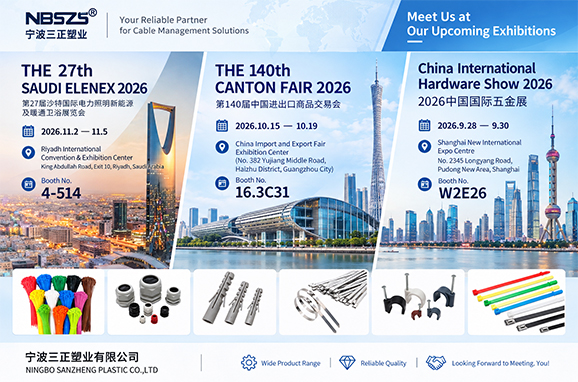
    Riyadh, Saudi Arabia · The 27th Saudi Elenex 2026
    Riyadh, Saudi Arabia · The 27th Saudi Elenex 2026Date: November 2 – November 5, 2026Address: Riyadh International Convention & Exhibition Center (King Abdullah Road, Exit 10, Riyadh, Saudi Arabia)Booth No.: 4-514
    VIEW MORE
  • Company News
    Guangzhou, China · The 140th Canton Fair
    Guangzhou, China · The 140th Canton Fair Date: October 15 – October 19, 2026Address: China Import and Export Fair Exhibition Center (Haizhu District, Guangzhou City)Booth No.: 16.3C31
    VIEW MORE
news
  • Factory Exterior View
  • Culture & Honor Wall
  • Culture & Honor Wall
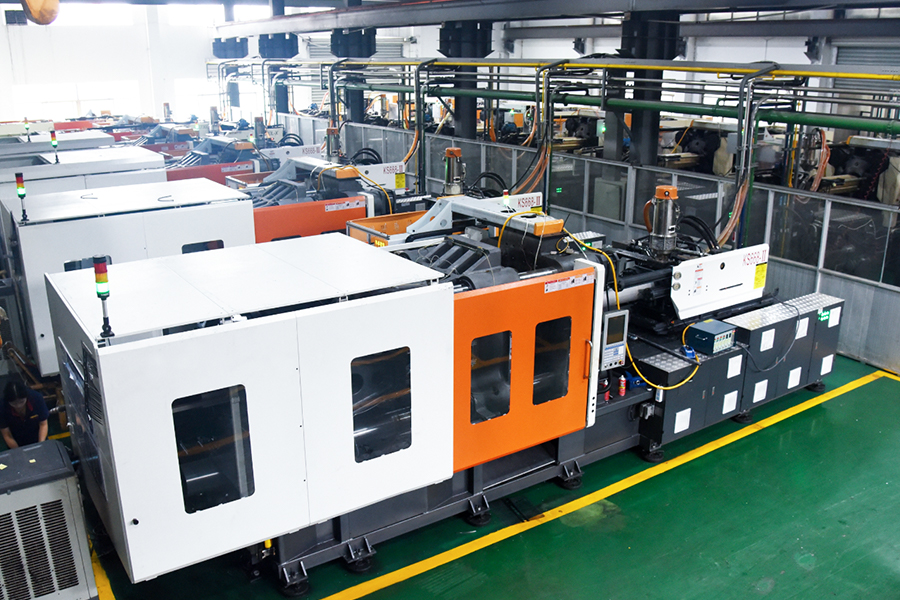
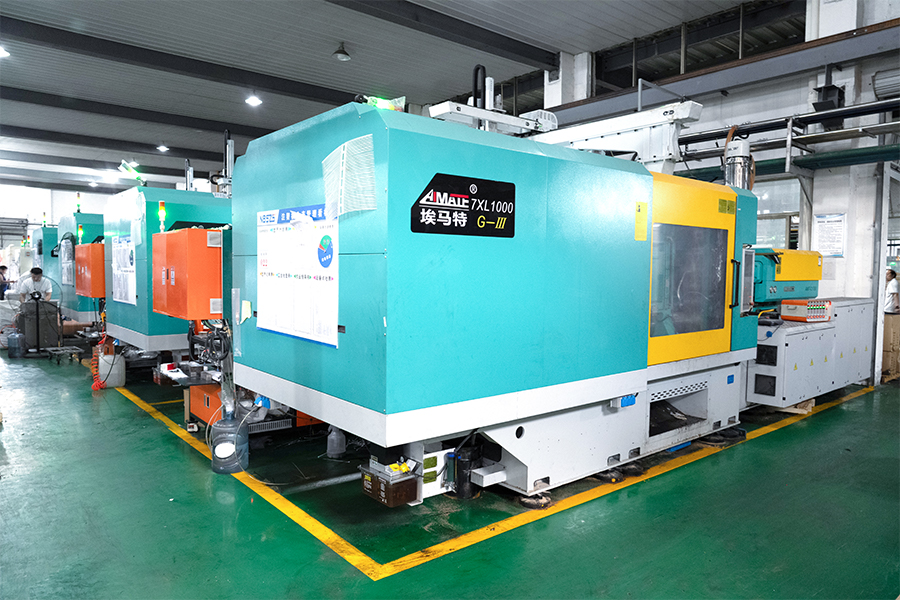
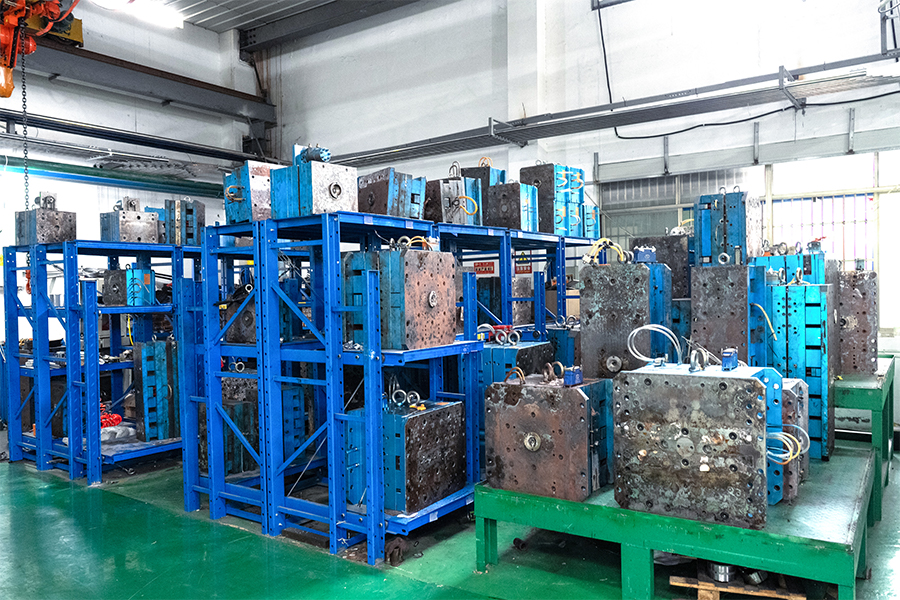
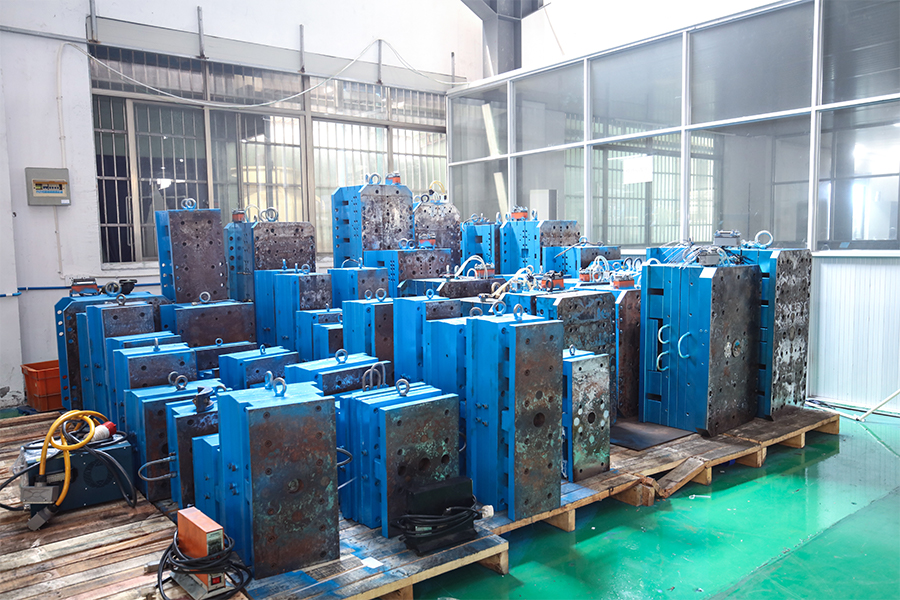
  • Production Workshop
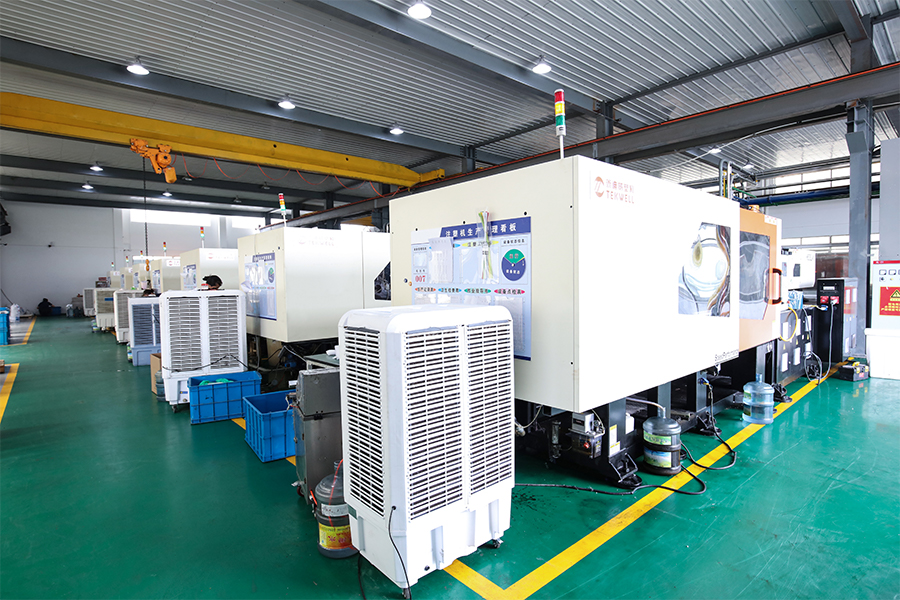
  • Production Workshop
  • Production Workshop
  • Production Workshop
  • Production Workshop
  • Production Workshop
  • Production Workshop
  • Production Workshop
  • Production Workshop